20000 dollari sporchi di sangue aka Kidnapping

20000 dollari sporchi di sangue aka Kidnapping

20000 dollari sporchi di sangue aka Kidnapping

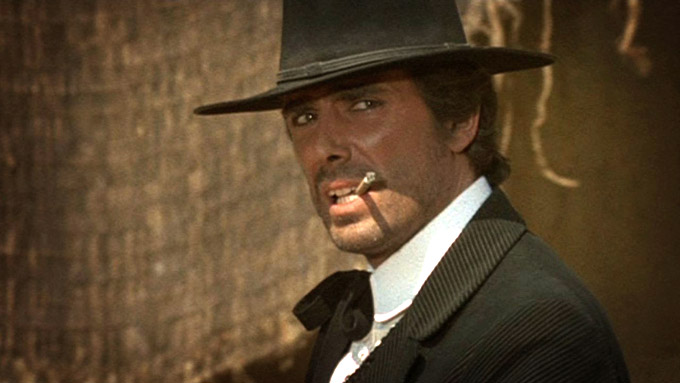
Here’s a fascinating if obscure and not entirely effective Spaghetti Western from  Alberto Cardone, one of the most underrated figures of the genre who – like Sergio Garrone – could be relied upon to turn out effective low budget product. Cardone’s westerns tended to be gothic melodramas, simultaneously overwrought and poetic, and he never really managed to recapture the intensity he bought to the genre elsewhere.

Although 20000 dollari sporchi di sangue doesn’t really work, it’s still packed full of interesting ideas and shot in a very unusual fashion. The plot mixes aspects of the trend for Sardinian kidnap films at the time (Barbagia, Sardinia Kidnapped etc etc) with the notable sub-genre in which an alcoholic gunslinger rediscovers his skills with a pistol (see also El puro). A gang of bandits (including genre regulars Fernando Sancho and Gino Marturano) kidnap the son of widow Teresa Gimpera, demanding $20,000 dolars ransom in exchange for his safe return. For some reason drunken ex-sheriff Frank, aka ‘Sh*tfaced’ (Brett Halsey), who’s pointedly characterised by the absence of a star on his chest, becomes the prime suspect, not least because the new Sheriff (Germano Longo) has a grudge against him.

This is a very odd film. The plot is familiar, but it’s all shot with an overexposed and yet deliberately dark and gloomy look. Some of it makes no sense at all – a forest shrouded in red mist – and much of it looks like a western equivalent of a Dario Argento movie. There are constant close ups, deliberately shakey camera movements and weird uses of focus, making this one of the more authentic acid westerns. Unfortunately, at the same time the pace is also sluggish and the editing bizarre (it’s one of those films where you can really tell it was filmed in several locations). But Cardone was one of the most interesting figures to work on the Spaghetti Western arena and, although this isn’t his best film, it’s still well worth a look.

Posted in Reviews | Tagged , , , | Leave a comment

New Mafia Boss

Telly Savalas in Crime Boss

Telly Savalas in Crime Boss

Telly Savalas in a Eurocrime film… what’s not to like! Crime Boss, directed by B-Movie specialist Alberto De Martino, was released a month before The Godfather came out in Italy (and was presumably rushed into production just after Coppola’s film came out in the States some six months earlier in order to capitalise on the hullabaloo .

The familiar plot follows Antonio Sabato as an ambitious young Sicilian with a chip on his shoulder who joins the family of – and becomes a trusted henchman to – gardening loving Don Savalas. But in the Mafia, friendships are only temporary… It’s not bad, the script is stodgy and it lacks pace, but it looks good (the cinematography was by Aristide Massaccesi). There’s a neat climax in a hospital (a direct steal from The Godfather, but a god one), a gangster gets melted down into soap (‘send him to his Mamma’) and there’s a decent soundtrack from Francesco De Masi. But it’s certainly far from the best of its type and doesn’t come close to some of De Martino’s other work in the field (i.e. Blazing Magnums, Roma come Chicago and The Insatiables).  It’s also not helped by the fact that Sabato, never the most appealing of actors, plays such a horrible character.

Posted in Reviews | Tagged , , | Leave a comment

Blood Story, by Amasi Damiani

Blood Story

Blood Story

This obscure movie from cult director Amasi Damiani was one of a bunch of Italian crime films made during the late 60s / early 70s and set in prohibition era America. Inspired, perhaps, by Bonnie and Clyde, and also by the fact that the filmmakers could cheaply recycle Spaghetti Western sets as 1930s style Americana through the handy use of slightly different costumes and by having the characters drive cars rather than ride horses.

After the usual robbery gone wrong a bunch of goons hide out from the law  in a deserted ghost town… but it turns out to be already being used by *another* bunch of goons also hiding out from the law! They shoot at each other, Tony Kendall and Femi Benussi turn up as a pastor – who might or might not be the real boss of one of the bunches of goons – and his wife and everything meanders on until everyone gets blown away in a poorly choreographed Sam Peckinpah style climactic sequence. It’s not good but it has a certain claustrophobic appeal and it’s nice to see familiar caratteristi like Fortunato Arena and Gualtiero Rispoli in larger-than-usual roles.

Posted in Reviews | Tagged , , , | Leave a comment

008 Operation Exterminate – Review

008 Operation Exterminate

008 Operation Exterminate

Aka A008 Operazione Sterminio
1965
Original running time: 95 mins
Italy
Produced by Fortunato Misiano for Romano Film (Rome), Copro Film (Cairo)
Distributed by Romana Film
Director: Umberto Lenzi
Story: Umberto Lenzi
Screenplay: Wallace Mackentzy, Humphrey Humbert
Cinematography: Augusto Tiezzi
Music: Angelo Francesco Lavagnino
Editor: Jolanda Benvenuti
Art director: Peppino Piccolo
Cast: Ingrid Schoeller (MacDonald, agent 008), Alberto Lupo (Frank Smith, agent 006), Dina De Santis (Beauty institute manager), John Heston [Ivano Staccioli] (Kemp, hotel manager), Mark Trevor [Salvatore Borghese] (Munk), Omar El-Hariri (Police officer), Ahmed Louxor, George Wang (Tanaka), Edoardo Toniolo (Mister X), Nando Angelini (Police lieutenant), Domenico Ravenna (Heinz), Omar Targoman, Lucky Arena [Fortunato Arena] (Stabbed man)

This was the first in a series of four spy films Umberto Lenzi made for producer Fortunato Misiano. Misiano was one of the great movers and shakers in low budget Italian cinema at the time, a former production manager in the pre war period who set up him own company, Romana Film, in the late 1940s and proved to have a knack for spotting a cinematic trend, moving from melodramas to historical adventures films, spy films to jungle girl movies as the audience interest waxed and waned. Lenzi became an accomplished director of giallos, war movies and crime films, but his spy movies are generally considered to be a rather motley bunch, hamstrung by their lack of budget and original ideas. Partially, this is also because until recently they’ve only been available in dreadful, 4th or 5th generation dupes which look as though they’ve been painted over with tarmac. In recent years, however, aficionados have taken the trouble to re-dub or subtitle them, and although 008 Operation Exterminate is by no means a good film it’s not as terrible as is sometimes said.

A dodgy Lebanese scientist called Van Deer is murdered in Cairo, causing the head of the secret services to become very edgy: a few months earlier he’d turned up at the embassy claiming to have invented a radar blocking device. They doubted him at the time – despite his causing three ships to crash just to prove it – but now that he’s dead it seems all the more likely that he was on to something… and that someone else far more dangerous might have taken his invention from him before his death.

Dispatched to investigate are British Agent Frank Smith (Alberto Lupo), aka 006, and his American counterpart 008, MacDonald (Ingrid Schoeller), who works undercover as a nightclub singer. They soon meet an assortment of dodgy characters: Kemp (Ivano Staccioli), a former Egyptologist who now runs a hotel and nightclub (!); Tanaka (George Wang), a randy Japanese collector of Jade; a local police inspector who seems to be awfully interested in everything that’s going on (Omar El-Hariri); and a killer with a false hand that shoots knives (Sal Borgese). Blah-di-blah-di-blah.

As with most of the spy films, it uses its locations well, appealing to the audiences vogue for the exotic. It wasn’t the only Italian spy film set in Egypt – Tessari’s La sfinge sorride prima di morire – stop – Londra (64), for instance – and it makes as much use a possible of the local sights before decamping for no reason whatsoever to Switzerland. It also displays a certain talent for the surreal – a ‘blind’ Egyptian killer in a fez, Borgese’s ridiculous assassin – and there’s a low budget visual flair that actual makes it a shame that the dialogue is so banal. There’s some great cinematography, often veering on the impressionist, and some decent stuntwork, not to mention an odd looking supporting cast, all of whom are shot in a way to make them look all the more peculiar.

Alberto Lupo and Ingrid Schoeller in 008 Operation Exterminate

Alberto Lupo and Ingrid Schoeller in 008 Operation Exterminate

It’s got several positive points, in other words, but it’s let down by the ridiculous screenplay and some occasionally lackadaisical film-making. Although there’s a decent surprise ending and a few moments of humour, these are counterpointed by some moments of absolute nonsense – a brief subplot about Gina Lollobrigida (?!?) – and some scenes, such as the clunky fight in a nonsensical beauty salon, where Lenzi seems to have frankly given up trying. The anti-radar device, obviously, looks like a trendy nineteen sixties lamp attached to a few wires and a stock footage antenna. The basic plot is utterly predictable, and it lacks the focal point of having a decent villains; Staccioli’s Kemp is basically just a gangster, a secondary character who has been elevated to the status of main antagonist. The blame for this lies firmly at Lenzi’s feet, as he was both the director and writer (with the help of the unlikely sounding Wallace Mackentzy).

Lupo and Schoeller make for a rather unusual pair of protagonists, Schoeller’s a bit different from the normal blond bombshell and spends a lot of her time bossing her partner about, while Lupo has a certain dourness that makes him stand out from the Eurospy crowd (he looks a little, I guess, like a less smarmy Dean Martin). They’re rubbish agents, of course, only too happy to climb in the back of a truck which has obviously been reinforced with steel (‘a portable gas chamber’, as Lupo proclaims when he realises his mistake) or walk into an ‘empty’ house which is full of villains. Curiously, it seems like Lenzi might have taken some inspiration from The Avengers, which seems to have been as much of an influence as the Bond films.

Posted in Reviews | Tagged , , , , , | Leave a comment

The WildEye 2: Giorgio Ardisson, the Italian James Bond

OK, a little information about where I am with the next WildEye book.  The text is just about completed, the images scanned and just about all the raw materials finalised.  Now all I need to do is get the final proofing done and then put it all together so it looks as nice as (if not nicer than) The WildEye 1.

That’s the good news.  The bad news – well, not for me – is that due to having a new job and not quite so much free time, I don’t have quite so long to spend on it, which is why news has been scanty and my posts here and on my facebook page have been rather irregular.

I’m still aiming to get something published for around Xmas time, fingers crossed!

Oh, and what’s the book about?  Well, it’s a huge look at the career of Giorgio Ardisson, the erstwhile Italian James Bond, who went on to appear in assorted Spaghetti Westerns, poliziotteschi, giallos, sexy comedies and more.  Honestly, this guy had one of the most curious careers imaginable.

And just to prove that I am working on it… here’s the front cover!

The WildEye 2: Giorgio Ardisson, the Italian James Bond

The WildEye 2: Giorgio Ardisson, the Italian James Bond


Posted in Giorgio Ardisson - The Italian James Bond | Tagged | 3 Comments

Vampire’s Night Orgy – Review

Fernando Bilbao in Vampire's Night Orgy

Fernando Bilbao in Vampire's Night Orgy

Aka La orgia nocturna de los vampiros (Es)
1973
Spain
Jose Frade producciones cinematograficas, S.A.
Director: Leòn Klimovsky
Story & screenplay: Gabriel Burgos, Antonio Fos
Cinematography: Antonio Lopez Ballesteros {Eastmancolor – Techniscope}
Music: not credited
Editor: Antonio Ramirez de Loaysa
Art director: Gumersido Andrés
Filmed: Exteriors shot in Talamanca del Jarama, Sesena, Uceda, Torrelaguna y Patones
Release information: Spain (109 mins), USA (09/74)
Spanish takings: €76.571,60
Cast: Jack Taylor (Louis), Dianik Zurakowska (Alma), Charo Soriano (Raquel), Helga Liné (the Countess), José Guardiola (Boris, the major), Manuel de Blas (Marcus), David Aller (Caesar), [Gaspar] Indio González (Ernesto), Luis Ciges (Godo), Antonio Páramo (Bujoli police official), María Vidal (Criada), Sandalio Hernández (Mesonero), Fernando Bilbao (the giant), Alfonso de la Vega (the lame blacksmith), Rafael Albaicín (the knife grinder), L. Villena (the bus driver), and with Fernando E. Romero (the boy), Sarita Gil (Violet, the little girl)

This is one of those films that starts – like The Island of Death and A Candle for the Devil – with a busload of strangers arriving in the depths of the countryside. Unlike those films, though, this is very much from the slightly cheesy, fantastical school of Spanish horror. Rather than encountering ‘real’ monsters, such as potty hoteliers or psychotic pre-teens, the beasties they encounter on their travels are very much the stuff of myths and legends.

In this case the passengers are on their way to begin new jobs at a country estate when their driver collapses and dies. Rather than carry on to their intended destination, they decide to take shelter in an isolated village of Tonia. It immediately becomes clear that something strange is afoot: the village appears to be entirely deserted, at least until the sun comes up. Even spookier, they come across Louis (Jack Taylor and his sinister mackintosh), who ‘travels around a lot’, and has ‘an American car from the seventies’. Louis is fortunate enough to discover a hole in his wardrobe, which allows a perfect view of pretty Alma (Dianik Zurakowska) taking all of her clothes off (and thus proves that the Hispanic hero is a very different creature to his American equivalent).

Needless to say, the inhabitants of Tonia – who all appear to be in thrall to the mysterious ‘Countess’ (Helga Line) – are actually cannibalistic members of the undead, and they’re soon munching their way through the entire supporting cast. Eventually, this leaves just Louis and Alma trying to fend off the thirsty bloodsuckers (as well as their reanimated, former companions), but will they be able to make their escape?

Hardly a great film, The Vampires Night Orgy is at least good fun, which makes is considerably better than much of director Leon Klimovsky’s output. Klimovsky was a dentist-turned-filmmaker who turned his hand to just about every genre going, usually with a singular lack of success. He was also renowned for not actually directing a number of the films for which he is credited, acting as a handy ‘name’, so that Spanish production companies could take advantage of lucrative domestic tax breaks (although this doesn’t seem to have been the case with his work in the horror genre). His cinematic signature, if one was to be distinguished, was to have repeated slow motion shots of women in nighties, and this does seem to have won him some fans in certain quarters. The females here remain real-time, albeit wearing diaphanous sleepwear, but the film does display the usual Klimovsky static camerawork and variable pacing.

Dianik Zurakowska in Vampire's Night Orgy
Dianik Zurakowska in Vampire’s Night Orgy

Fortunately, he’s backed up by some handy professionals here. Antonio (The Last Days of Pompei (Gli ultimo giorni dei Pompei, 59) Ballesteros makes the remote locations look suitably forlorn, and the village itself seems to be on the point of total collapse. The cast of Spanish character actors is fine, with veteran Jose Guardiola being particularly effective as the smooth Major and Fernando Bilbao, a creepy looking thug who also acted under the name ‘Fred Harris’, making an impression as an axe wielding giant. Helga Line doesn’t actually have that much to do, but she plays the Countess in a not dissimilar way to Lina Romay’s melancholic vampires in Female Vampire and Vampyros Lesbos.

Despite its rather unambitious premise – the plot is a simple conflation of vampire and folklore legends, with a dash of Brigadoon thrown in for luck – one of the best things about The Vampires Night Orgy is its script. Writer Antonio Fos had a hand in an good number of Spanish genre productions, most of which are far above average (Murder in a Blue World (UnaGota de sangre para morir amando, 73), The Glass Ceiling (El techo de crystal, 71). Although this isn’t one of his more incisive works, it does benefit from a considerable, pitch black humor. One particularly grotesque running joke finds the villagers, who have no ‘real’ meat to feed their visitors, lopping parts off each others bodies for use in the cooking pot. This gag also gives rise to poor Dianik Zurakowska finding a human finger in her supper, a good decade before C. Tomas Howell experienced something similar in The Hitcher. Fos also penned the aforementioned A Candle for the Devil – which features an unfortunate diner being served a human eyeball –in the same year, so you do have to wonder whether he’d suffered a disagreeable restaurant experience at around the time.

The Pagan DVD under review is good, if not spectacular. The picture is a little soft – nothing too terrible – and it’s presented in a non-anamorphic 2.35:1 aspect ratio. The sound, unfortunately, is mixed very low, and if you forget to re-adjust your volume control before switching back to your TV you’re liable to get a painful blast in your eardrums. The Spanish version apparently lasts about 20 minutes longer and features additional nudity, but in some ways the shorter running time suits it just fine.

Posted in Reviews | Tagged , , , , | 1 Comment

Bruno Smith

Actor Bruno Smith in Acqua Amare

Bruno Smith in Acqua Amare

Here’s a curious one… I can’t find a single shred of information about Bruno Smith, an actor who – judging by his name – must have been either English or American (or, like Ray Lovelock, Italian but of Anglo-Saxon origin).  He’s not at all well known even among Italian film aficionados, although he starred in a good two dozen films.  Probably because most of his films were made prior to the ‘Golden Age’ of Italian cinema.  In fact, if he was in fact English or American he must have been one of the first English or American actors to have worked in Italy; appearing in his first film, Piero Ballerini & Corrado D’Errico’s Freccia d’oro, way back in 1935.

He began appearing regularly in films during the wartime period, featuring in ten titles between 1940 and 1945.  None of them are particularly well known today, although he did work with respected directors like Guido Brignone and Goffredo Alessandrini.  Mostly he appeared buried in the credits as officials or soldiers.

After the war, he carried on in the same busy way.  He was in Erminio Macario comedies (Adamo ed Eva, 49), was a slave trader in Mario Soldati’s O.K. Nerone (51) and turned up in numerous melodramas like Carne inquieta (52) and Menzogna (52).

By the 1960s he’d moved primarily into television, working on successful historical adventures like I tre moschettieri (64) and
Il conte di Montecristo (66).  His last credited appearance was in the Tino Buazzelli series Nero Wolfe in 1969.

It’s a substantial filmography, but I can’t find any biographical information about the guy at all.  If anyone knows anything about Mr. Smith, please let us know!

Posted in Performers & directors | Tagged | Leave a comment

Bruno Minniti – Obscure Italian Leading Men #2

Conrad Nichols in RUSH

Conrad Nichols in RUSH

Bruno Minniti was born Luigi Mezzanotte on December 5th, 1954 in Rome. In his official biography he claims to have been involved with cinema from a young age, even appearing in ‘an important film’ as a child, although there are no credits for him until he was 23 years old. In time he began his career as an actor by appearing in soap operas and fotoromanzi such as Grand Hotel and Bolero. He was most associated with Lancio, where he took on roles that were intended for Franco Gasparri (possibly the biggest star of Italian fotoromanzi who died in 1999) and became famous in his own right.

At the same time, he started acting in low budget films, beginning with the Italo-Chinese co-production Roman Encounter (Yi xiang meng, 77). He then had supporting roles in Romolo Guerrieri’s weird comedy L’importante è non farsi notare (79), Roberto Mauri’s sleazy Porno Killers (80) and a handful of sexy comedies for directors Michele Massimo Tarantini and Mariano Laurenti.

In 1983, though, he suddenly adopted both a new pseudonym, Conrad Nichols, and a new persona as a musclebound action hero in films inspired by the success of Arnold Schwarzenegger and Sylvester Stallone. He began by a trilogy of films for Tonino Ricci in 1983 and 84: Thor the Conqueror (a Conan rip-off that was even marketed as The Beastmaster 2 in some territories), Rush and Rage (which were both late, not particularly inspiring entries in the short lived post-apocalypse genre inspired by Mad Max). He was back with Ricci in Days of Hell (86), a war film that tried to mop up some of the audiences who had enjoyed Rambo, before working on a mediocre Indiana Jones clone, The Secret of the Incas Empire, directed by Gianfranco Parolini in 1988. His roles dried up as the Italian film industry went into decline in the 1990s, but he did appear in a couple more comedies before shooting his last film, Buck and the Magic Bracelet in 1999, again for Tonino Ricci.

Conrad Nichols and wig in THOR

Conrad Nichols and wig in THOR

None of his films were particularly succesful, mostly being video store shelf filler of moderate quality. And he was hardly the most charismatic of performers, although it could be argued that he wasn’t much worse than Stallone or Schwarzenegger, his Hollywood equivalents. Most of his films were undermined by their low budgets and variable production values (not to mention their low aspirations), but over time they’ve come to gain a certain cult appeal.  And whatever his merits as an actor, Minniti seems to have worked with people regularly, indicating that he was a good character on set.

Minniti, meanwhile, went on to become something of a regular on TV, appearing on shows like Jeans, Pronto è la Rai, Uno Mattina and Mi Manda Lubrano. He has also released a number of singles and tours Italy as a popular singer.

Some high class Conrad Nichols action:

Posted in Performers & directors | Tagged , , | Leave a comment

Stan Cooper (aka Stelvio Rosi), Obscure Italian leading men #1

Stan Cooper in Go Away! Trinity Has Arrived in Eldorado

Stan Cooper in Go Away! Trinity Has Arrived in Eldorado

Here’s kicking off another series of posts to run in tandem with my other occasional threads, Black Actors in Cinecitta and American Actors in Cinecitta. Obscure Italian leading men is dedicated to, well, to the less celebrated stars of Italian cinema. The kind of people who would be called in when a producer couldn’t afford Franco Nero; heck, couldn’t even afford Terence Hill or George Hilton. People who appeared in a handful of films and were then promptly forgotten. They could be Italian, but also foreigners who had a brief career in Cinecitta. We’re talking about the likes of Fred Robsham, Lincoln Tate, Jeff Cameron and, in this installment, Stan Cooper, aka Stelvio Rosi.

Sr Rosi was born in 1938 in Rome, and appeared in a surprising amount of films over the course of his film career. He actually started off as a child actor, appearing in Ferdinando Maria Poggioli’s Sissignora at the age of four in 1942. After a break of nearly 20 years he started appearing in small roles in romantic comedies and musicarelli like Diciottenni al sole (62) and Gli onorevoli (63). He was one of several young actors (Terence Hill, Giuliano Gemma, Lou Castel) to appear in Luchino Visconti’s The Leopard (63), probably the most prestigious film he’d be involved with, and he also worked with the much respected comedy director Luciano Salce on La voglia matta (62).

Over the next few years the size of his roles increased and it looked as though he was being groomed to follow in the footsteps of Ettore Manni, Enio Girolami and Antonio Cifariello, leads from the 1950s who were growing too old for the youth oriented films in which they specialised.  He was third billed in Domenico Paolella’s Ballo in maschera da Scotland Yard (63) and Mario Amendola’s Soldati e caporali (65). He had his first leading role in Crime Story (68), a cheesy and not particularly good caper film directed by José Luis Merino (I reviewed this one for the Eurospy Guide and can honestly say I can’t remember one thing about it). And he would feature regularly in Merino’s work; in 1969 he was the protagonist in two war films for the director, The Battle of the Last Panzer and Hell Commandos, both of which also co-starred American Actor Guy Madison. Cooper was hardly the most exciting presence in them, but they were decent examples of their type, and his next film with Merino, the western More Dollars for the Macgregors (70), was far better than it’s origins as an cheapjack rip off of Franco Giraldi’s Seven Guns for the Macgregors and Up the MacGregors would imply. In fact, this was one of Cooper’s best performances, and he seemed a more relaxed, charismatic presence in a villainous part (as a drunken, erratic bandit being chased down by Peter Lee Lawrence and Carlos Quiney) than he had done in his previous heroic roles.

While shooting these action films for Merino, he was still appearing as a support actor in lighthearted productions like Pensiero d’amore (69) and Venga a fare il soldato da noi (71), and in Italy he’s much better for these parts than any of his other work (whereas most of these films remain totally unreleased in the English speaking world). His first leading role away from Merino was in the rightfully obscure Something Creeping in the Dark (71), a rubbishy horror film also featuring Farley Granger and Lucia Bosé. He rapidly followed it with turns in several more spaghetti westerns throughout 1972: Great Treasure Hunt was a terrible Tonino Ricci film also featuring Mark Damon and Rosalba Neri (this really is one of the poorest films of its type), You’re Jinxed, Friend You’ve Met Sacramento was a middling Giorgio Cristallani film in which he had a supporting role and Go Away! Trinity Has Arrived in Eldorado was a frankly deranged film in which he was rather overshadowed by the scenery chewing antics of genre stalwarts Craig Hill and Gordon Mitchell. As the popularity of the Spaghetti Western began to fade in the early seventies he was called upon to appear in two 1973 adventure movies (Da Scaramouche or se vuoi l’assoluzione baciar devi sto… cordone! and They Were Called Three Musketeers But They Were Four). None of these productions were hugely successful in terms of either quality or box office and are frankly of interest mostly to die hard aficionados of B-Movies.

Stan Cooper in The Battle of the Last Panzer

Stan Cooper in The Battle of the Last Panzer

Suitably enough, his career came to an end in 1973 with another film for José Luis Merino, their sixth collaboration (thay’d also made a 1972 adventure film called Pirates of Blood Island). The Hanging Woman was another horror movie, but much more succesful than Something Creeping in the Dark, with Cooper starring as a young man searching out his inheritance in Scotland (a popular destination for Italian horror movies) and stumbling across occultists, mad scientists, a witch and Paul Naschy as a hunchbacked gravedigger. Completely nuts, but good fun.

After this highlight, Cooper simply disappeared.  It’s really most peculiar: there are no indications that he appeared in TV or on stage, and his career didn’t so much fizzle out – as with most actors of the time – as simply stop. The only clue as to his activities after his brief flirtation with stardom is that IMDB has two credits for him in the 1990s, as executive producer on Lambada (90) and line producer on the big budget Anaconda (97), both of which were shot in Brazil, so if it was the same Stelvio Rosi maybe he ended up in South America for some reason?  He’s not listed as a producer on any other Italian films, so he may have acted as ‘the Brazilian connection’ for films shot there.  IMDB also has an interesting little bit of trivia about him, saying that he lives in Rio de Janeiro and runs a video distribution company.  Much as I’m loathe to place trust in the IMDB, it does seem that there’s some credence to this.  But it would be great to find out more about Stelvio Rosi, one of the more curious of Italian actors of the time.  If anyone has any more information… please get in touch!

Here’s a super-cool Italian trailer for Something Creeping in the Dark (which really makes it look like a much more entertaining film than it actually is…)

Posted in Performers & directors | Tagged , , | 5 Comments

More Dollars for the MacGregors – Review

More dollars for the MacGregors is

More dollars for the MacGregors is

Aka Ancora dollari per i MacGregor, La muerte busca un hombre
1970
Original running time: 98 mins
Spain / Italy
A Prodimex Films (Rome), Hispamer Films (Madrid) production
Director: José Luis Merino
Story and screenplay: José Luis Merino, Enrico Colombo
Cinematography: Emanuele Di Cola
Editor: José Antonio Rojo
Cast: Peter Lee Lawrence (Robert McGregor / Blondie), Carlos Quiney (George Forsyte), Malisa Longo (Yuma), Stelvio Rosi (Ross Steward), Mariano Vidal Molina (Joe Saxon), María Salerno (Maticha), María Mahor (Gladys McGregor), Luis Marín (Pancho), Antonio Mayans (Sturgess, Young Man after Saxon), Dan van Husen (Frank Landon), Antonio Jiménez Escribano (Old Tradesman), José Jaspe (Sheriff of Jonesville), José Marco (Debuty sheriff), Stefano Caprioti, Enrique Ávila, Giancarlo Fantini, Enzo Fisichella, Renato Paracchi, Santiago Rivero, Claudio Trionfi

Despite the cheeky title, this wasn’t really an attempt to rip off Franco Giraldi’s box office smashes Seven Guns for the MacGregors (66) and Up the MacGregors (67).  Whereas they were light-hearted romps this is a moody, cynical western with an almost total absence of humour and a rather dark, sombre atmosphere.  It actually belongs more to the dual protagonist school of Spaghetti Westerns, in which two very different characters form an uneasy alliance in order to defeat a particularly dastardly varmint; most particularly For a Few Dollars More, which also revolved around a partnership between a blond, handsome bounty hunter and his older rival (and which also featured a sub plot involving a dead sibling).

George Forsyte (Carlos Quiney) is a notorious bounty killer who is doing his best to earn a grand total of half a million dollars before retiring.  He specialises in setting traps for his victims, drawing them in by using his wife Gladys (María Mahor) as bait, pretending that she’s an innocent on the road carrying plenty of easily purloinable cash; and when he catches them, he shows no mercy, killing them with his trademark technique of a bullet in the forehead.  Things go badly wrong, however, when he tries to bring in vicious killer Joe Saxon (Vidal Molina).  Distracted momentarily by a poisonous snake, he allows Saxon to escape and Gladys is murdered as a result.  Naturally enough, he wants to have revenge, but this doesn’t work out either: before he can get to him Saxon is killed – and the reward on his head is collected – by another bounty hunter called Robert MacGregor (Peter Lee Lawrence).

While Forsyte spends time licking his wounds, MacGregor sets off to capture another villain, Ross Steward (Stan Cooper).  Steward and his men are hiding out in the hills, where they’re forcing the local Indians to mine salt, but MacGregor’s initial efforts to locate him result in him being badly beaten and left for dead.  Nursed back to health by tasty squaw Yuma (Malisa Longo), he finds his work has become further complicated by the reappearance of Forsyte, whose motivations have become even less clear following his wife’s death.

More dollars for the MacGregors is a flawed but surprisingly enjoyable Spaghetti Western.  As with many of the primarily Spanish westerns, it’s a surprisingly cruel affair, but it has higher production values and is put together with more skill than genre films made by the likes of Ignacio Iquino or Juan Bosch.  The script has some good ideas, not least the character of Forsyte, a seriously ambiguous figure who becomes increasingly deranged as the running time progresses.

In fact, for the first forty minutes or so it all works very well, but then it shifts focus with the death of Joe Saxon at about the forty minute mark.  At this point Forsyte fades rather into the background – until the final stages of the film at least – and the less defined Macgregor, who had hardly featured previously, takes centre stage.  Several new characters are also introduced, including the erratic Steward and the Indians (who look like nothing so much as escapees from a hippie festival), which acts to defuse the mood and ambience which had developed so nicely. In effect it plays like two parts of a TV series joined together into a feature length production, which raises the question as to whether this was intentional or whether one of the stars was perhaps unavailable for some of the filming and the script had to be adapted at the last moment.

Peter Lee Lawrence in More dollars for the MacGregors is

Peter Lee Lawrence in More dollars for the MacGregors is

Despite this, it’s reasonably made and although the budget wasn’t huge the production values are more than adequate.  Jose Luis Merino was a competent director who worked in a variety of genres, and he definitely stands as one of the more capable directors working in Spanish popular cinema at the time.  He’s greatly aided by some decent work from his regular cinematographer Emmanuele Di Cola and editor José Antonio Rojo (who all worked on and off together almost a dozen times), and the whole production has a curious, counter-cultural, mystical feel which is something of a surprise given that Merino’s other work was rather standard B-movie stuff.

As for the performances, Peter Lee Lawrence makes for a solid lead despite the flimsiness of his character and Carlos Quiney, who appeared almost exclusively in films for Merino and was known as ‘the Spanish Errol Flynn’, is good as the ambiguous Forsyte.  But the most entertaining performance comes from Stan Cooper – generally a rather wooden actor – who seems to be having fun as the spliff smoking, whiskey drinking nutter Steward (a character who seems to have been intended as a cross between Gian Maria Volonte’s Indio from For a Few Dollars More and, bizarrely, William S Burroughs).  He also gets to wear the same famously incongruous leopard skin poncho as Lang Jeffries in Duel in the Eclipse (which was also co-directed by Merino and written by the same team of Arrigo and Enrico Columbo and María del Carmen Martínez Román).  Not at all bad.

Posted in Reviews | Tagged , , , , | 1 Comment

Sergio Corbucci on The Specialists

Here’s a little article I found in L’unita from March 20th 1970.

“I’m inviting the public not to go and see Gli specialisti because most people will not recognise it as my film.” So said director Sergio Corbucci explaining how he feels after the distributors cut some scenes for his new film.

“The film,” he continued, “Now lasts ten minutes less. Following the cuts some situations in the story and the presence of certain characters are unintelligeable. The owner of the distributor, Magna Film, cut those sequences so that it could be certified to show to minors aged fourteen and over rather than those over eighteen, as was the first decision of the censorship committee.”

The director added that he had not been approached by the distributor, saying, “He was surprised when I sent them a protest telegram”.

Posted in From the Archives | Tagged | 2 Comments

Nuns, giallos and comedy mix ups…

Death Steps in the Dark locandina

Death Steps in the Dark locandina

Here’s a fun article I found in L’unita from February 1977 regarding Maurizio Pradeaux’s middling giallo Death Steps in the Dark.  Smacks of being publicity buff, but it’s quite fun anyway…

In Aretino, an erotic-giallo was projected instead of the passion of Jesus Christ.

On the occassion of a convent feast, the nuns sent out to hire from via Fiume, where there are several film distributors, a film which was to be projected in their convent that evening. But, instead of the passion of Christ, the clerk accidentally gave them an erotic-thriller which was due to be released the same evening in a cinema in Florence, namely Death Steps in the Dark directed by Maurizio Pradeaux.

The owner of the distribution company, Sr. Pocci, went to the convent to withdraw the film as soon as he realised the mistake.

Believing he’d find the convent in a state of uproar, he was instead astonished to find all the sisters intent on seeing the film with an open mind. Scandalized, Sr. Pocci talked to the Mother Superior, who told him: “We’re modern sisters, a new christian order, we try to keep up to date with everything that happens in the world.” So, after a long conversation, Sr Pocci was forced to stop the screening because the film was due to come out in the afternoon for it’s world premiere at the Cinema Modernissimo di Firenze.

The incident led to the delayed screening of the film, where the audience were demanding refunds of their tickets. But, fortunately, everything fell into place with the arrival of Sr. Pocci and the film.

The film was very much enjoyed by the sisters, and also to the cinema spectators who saw the film yesterday night at its premiere. It’s a film to see from the start. Also present at the premiere were the protagonists and cultural figures, from industry and the arts.

Posted in From the Archives | Tagged , | Leave a comment

Vortice – Review

Irene Papas in Vortice

Irene Papas in Vortice

Aka Silvana (Germany)
Italy
1953
Produced by Raffaello Matarazzo for Lux Film & P.A.R. Film
Director: Raffaello Matarazzo
Story: Aldo De Benedetti, Alessandro Continenza, Raffaello Matarazzo
Screenplay: Aldo De Benedetti, Ennio De Concini [uncredited on Italian print], Alessandro Continenza, Raffaello Matarazzo
Cinematography: Rodolfo Lombardi {Gevacolour}
Music: Annibale Bizzelli
Editor: Mario Serandrei
Art director: Ottavio Scotti
Cast: Silvana Pampanini (Elena Fanti), Massimo Girotti (Dott. Guido Aureli), Gianni Santuccio (Luigi Moretti), Irene Papas (Clara), Giorgio Capecchi (the police commissioner), Gualtiero De Angelis (the chief of police), Anita Durante (the concierge), Franco Fabrizi (Viaggiani), Teresa Franchini (Mother Superior), Enrico Glori (the prison director), Patrizia Lari (Elena’s chambermaid), Rita Livesi (a nurse), Nino Marchesini, Dina Perbellini, Bella Starace Sainati (a sister), Aldo Silvani (the hospital chief), and with the little Maria Grazia Sandri (Anna, Elena’s daughter) and the participation of Flo Sandon’s (singer at the nightclub).
Uncredited: Alma De Río, Paolo Ferrara (Sig. Fanti, Elena’s father), Amina Pirani Maggi (a prison guard), Adriana Facchetti (a prison guard), Anna Maria Di Quattor

In the early 1950s, the melodrama was the genre of choice for Italian audiences; whether they be rich or poor, sophisticated or uneducated.  With their sense of heightened emotion and fatalistic scenarios, these were formulaic films that re-used situations and storylines in much the same way as the Spaghetti Western or the Peplum.  The difference being, perhaps, that this kind of melodrama was merely a specific manifestation of the melodramatic, a style of storytelling that, although universal, seemed particularly entwined within Italian culture, integral in entertainment from the Opera to comic strips (the fotoromanza).  Furthermore, although the melodrama was a readily defined type of film from a specific period and of a specific form, the melodramatic was a style of storytelling that was latent within many of the other genres of Italian film that were to become popular in later years.

Elena Fanti (Silvana Pampanini) is shocked to arrive home one day and find that her father has killed himself.  It appears that he’d managed to get himself into financial difficulties, and had owed the bank a considerable amount of money; money which she is now left to pay off.  It appears there’s only one way for Elena to cancel the debts: by marrying their bank manager, Luigi Moretti (Gianni Santuccio), who has been pursuing her unsuccessfully for some time.  Although understandable, such a course of action also means that she is left with no option but to break off her engagement to her true love, Doctor Guido Aureli (Massimo Girotti).

Despite her doubts, the marriage takes place and, for a short while, things seem to be going reasonably well: they have a child, a big house and are comfortably off.  Beyond this, however, the circumstances of their union are causing the relationship to become increasingly troubled.  Luigi begins an affair with a young woman called Clara (Irene Papas) and, whilst out driving with her one night, is caught up in a car crash.  Whilst Clara is fine, and leaves the wreck before the police arrive so as to keep their liaison secret, Luigi is left paralysed from the waist down.

Quite coincidentally, the Doctor assigned to treat him is Guido, who doesn’t waste much time in trying to persuade Elena to run away with him.  Sorely tempted as she is, Elena can’t bring herself to abandon her husband; which makes it all the more suspicious when he is found dead.  The police promptly arrest her, figuring that she’d deliberately given him an overdose of his medicine.  This leaves it up to Guido to prove her innocence and unravel the identity of the true killer.

Massimo Girotti in Vortice

Massimo Girotti in Vortice

Vortice has just about all the melodramatic check boxes ticked off: true love interrupted, a dark secret from the past pushing its way into the present, a vulnerable child, a murder and some kind of debilitating illness or disability.  The whole narrative is targeted towards triggering the tear ducts of the post-war Italian audience, all of which can make it seem rather overwrought to the contemporary viewer (and especially the habitually cynical, hard-hearted English viewer).  It all gets extraordinarily ripe in the final half hour, with poor Elena confined to a prison cell and her unfortunate daughter dispatched to an orphanage (where she is bullied and falls grievously ill, natch).

As with most of the melodramas, the emphasis is firmly on dialogue rather than action.  Although it may sound as though the plot has thriller elements, these are really quite peripheral, while the tension is built up through the story rather than any kind of cinematic trickery.  This does mean that it all has a somewhat stagy feel, not least because the camerawork is almost wholly static apart from the occasional pan into close up.  The stock shot is of two or sometimes three characters talking to each other (rather than moving), although there are some exceptions to this (notably at the climax in which several characters gather on a staircase as Elena threatens to kill herself).

This old-fashioned feel is furthered by the use of some extremely dated editing techniques, some of which – screen wipes, for instance – have even come back into vogue again.  And a certain lack of sophistication is betrayed by the occasional poverty-row giveaway (a car crash filmed with blatant toy cars – in which the passengers have time to bite their fingers in a ‘worried’ fashion before careening off the road – and a scar that’s visibly not there when filmed from certain angles).  However, despite this lack of modernity, it’s all filmed capably enough, with nice use of the black and white medium for shadows and lighting.

Rafaello Matarazzo was the King of Melodramas, a talented filmmaker who introduced decent production values to a type of film which had habitually been previously made on the cheap.  Curiously, this was the first of two films he made in close succession for Lux Film, the biggest production company in Italy at the time, rather than his usual financiers Labor and/or Titanus (the other being Torna! (54)). His biggest hit was the phenomenally successful Catene (49), while most of his subsequent work was similarly profitable at the box office.  In all honesty, Vortice isn’t one of his more acclaimed films, but it’s still well worth a quick look as an interesting curio.  Matarazzo never really made a mark once the genre had faded in the late fifties and died at the age of 57 in 1966.

Given the theatrical nature of the production, a lot rests with the performers, who all do a decent job.  Silvana Pampanini was a huge star at the time, thanks to appearances in the likes of O.K. Nero (O.K. Nerone, 51), although she does seem a little old for the part (partly because she comes across as rather maternal here, hardly the sex-bomb look associated with Gina Lollobrigida or Sophia Loren).  Nevertheless, she looks suitably distressed for the entire 100 minutes, which is just about the main thing she’s called on to do.  Irene Papas has more fun as a femme fatale, while Gianni Santuccio and Massimo Girotti (from In nome della legge (49)) are effective as the male leads.

Posted in Reviews | Tagged , , , , , | Leave a comment

Paura, by Antonio Manetti, Marco Manetti

The Manetti brothers have been busy recently: only a few months after The Arrival of Wang they have a new release, a horror film called Paura.

According to the blurb on the FrightFest site (where it’s showing), the plot goes like this:

There are situations in life that are better avoided. Marco, Simone and Ale have been friends for a long time, living in a neighborhood on the outskirts of Rome where nothing ever happens. The boys consider themselves lucky when they find themselves holding the keys to a beautiful villa outside of the city. The villa belongs to Marchese Lanzi, who will be away over the weekend. The Marquese is a strange character, a rich collector of vintage cars, carefully looked after by the shop where he works. The three boys can not resist and plunge into the luxury without restraints. But there is one thing they should not do: go to the cellar…

According to La reppublica:

Still a rarity in our cinema, during the 1960s the Italian horror film introduced sexual drives and perversions on screen through the films of Bava, Margheriti and other B-movie masters.  And we don’t have to go too far to see connections with the Manetti brothers, aka MArco and Antonio Manetti.  One of the characters of Paura, Simone, attends a university lecture where the professor explains the poetry of Mario Bava’s work…  After a long introduction, which is necessary to establish the characters, the rate of suspense is mainttained at a high level until the very end.  The Manetti’s appear to have learned their lessons from Bava and Argento… and add a does of splatter to the traditional recipe.

Some other reviews have been less positive, but this sounds very hopeful.  I like the Manetti Borthers, who are pretty much carrying the torch where Italian exploitation cinema goes.  It’s also worth noting that this has another connection to the golden age of Italian exploitation cinema: it was produced by Luciano Martino’s Dania Film (Dania have made hundreds of films from the early 70s on, from poliziotteschi to splatter movies)

Here’s the trailer:

Posted in Latest News, New Italian Cinema | Tagged , | Leave a comment

Interview with Mario Gariazzo from La Stampa

Here’s a cool interview with Mario Gariazzo that I stumbled across on a Ufology site (and which seems to have originated from La Stampa).  Gariazzo was a former journalist and film director who made a variable selection of films from the sixties to the end of the eighties, including Spaghetti Westerns, crime films and sexy comedies.  He also made three science fiction films, The Eyes Behind the Stars, Brother from Space and The Coming of Aliens and was one of the most prominent UFOlogists in Italy, regularly appearing on TV and in news shows about the subject.

According to another UFOlogist at the time this article was written (93):

Mario Gariazzo is a well known guy. He was indeed a member of NICAP in the late ’50s. He published one of the very first saucer magazines,sold in the Italian newsstands for a brief time in 1960: “Dischi volanti” (Flying Saucers) under the pen-name of “Sidereus”, when living in Turin. Then he stopped it and flew away, because of his debts (it was rumoured).

(He goes on to say that Gariazzo was basically a UFOLogist in order to support his product, i.e. films, which seems a tad unfair considering he’d obviously been into the subject since its early days, but squabbles among UFOlogists aren’t anything new). Anyway, here’s the article…

The revelations of director Mario Gariazzo who is preparing a movie in cinema verità, entitled “The Cover-Up”.

Top secret archives in Moscow, but the CIA is hiding the truth, too.
Franco Nero plays lead as a Soviet officer.

ROME. The other day it was announced in the news that a secret dossier on the flying disks had been discovered in Russia. We were informed that 1965 in Hanoi Soviet anti-aircraft defences fired at a UFO, which answered the fire with a luminous ray, causing the death of 200 people. It seems like science fiction. We spoke somewhat to director Mario Gariazzo who is preparing a movie in cinema verità on UFOs, entitled “The Cover-Up” with Franco Nero playing lead as Major Jurij Leonov, an ex-agent of the KGB. The film doesn’t show interplanetary craft, but it intends to eviscerate the superpower’s plot to hide the truth of the phenomena from the public eye – deeply worried about a possible attack on Earth. The film will materialize in the United States and Russia, with the aid of Aldo and Daniele Ricci of Italy Films Production and of Ital Service Video.

Gariazzo explains:
«I think I have arrived at the point of breaking the wall of conspiracy of silence, regarding this question. I am encouraged by the election of Bill Clinton as President – a fresh American voice.Who knows? Maybe he wants to be the one himself or allow others to reveal what Jimmy Carter promised, when he told the country during his campaign:”If I become President I will inform the world about UFOs. There are quintals of material in the National Archives, labelled secret, which the public must become familiar with. We must not close our eyes, even though reality is bewildering”. But then he didn’t do anything about it. Why?»

Mario Gariazzo has a thorough knowledge of the subject, having been part of a very important investigation committee on UFOs, NICAP, or the «National Investigation Committee On Aerial Phenomena» which for many years has collaborated actively with the CIA. Gariazzo has come into possession of documents that seem important and are strictly confidential.

«They are real – he says – in fact all of them carry the following label: “Reproduction of this document in whole or in part is prohibited except with permission of the office of origin.” Be aware that to impose a cover-up on the subject, the responsible authorities didn’t hesitate to gerrymander some data, and they have forced to “strange suicides” many persons who had taken too close an interest in the problem».

But now the truth seems to emerge in Russia.

«In Moscow in Lubianka Street 6 all of the secret services are located. KGB’s agency is on the fourth floor, and here are the headquarters of KRU, the “Kontr Razvedochnoe Upravlenye,” i.e. the agency for protection of military secrets. Here the UFO dossiers are safeguarded, too. An enormous material which I have been able to consult».

And these dossiers are the starting point of his film?

«Not only. I possess US documentation, too. In short, I have picked up a considerable bulk of data. I wanted to do a worldwide journalistic investigation. Then I decided for the movie – dealing not with science fiction, but with intelligence services – in which it is documented that the governments of the world are hiding the truth about the flying disks».

And are they hiding the truth about the extraterrestrials, too? Is it a truth that they have been bagging and alienating?

«Certainly. I have been able to see a deep-frozen alien in Dayton, Ohio. But first you must know that in the summer of 1949 a nuclear experiment was performed near Aztec in New Mexico. A flying disk was attracted to Earth by the burst. It didn’t have openings: compact and solid like a coin. After having struggled for weeks the experts succeeded in opening it, and they found six dead bodies inside. Here is the testimony of university professor Spencer Carr, depicting one of the extraterrestrials: “Apparent age of 30 years, perfect set of teeth, chromosomes and human blood.” But through dissection of the cranial canopy it has been discovered that the brain didn’t fit the age, but that of a man of 400, 500 years».

Depict what you have seen!

«Not a monster, but a being structured like a human. Nude, of male sex. A creature of around 90 centimeters, of olive color, but in proportion to the body, with arms and legs thinner than ours. Big eyes and Mongolian features».

Aren’t you afraid of being labelled a dreamer?

«Why on earth? My work, my seriousness testifies to the contrary. If I say that I know a lot about the flying disks and then realize a cinema verità, you’ll see that I possess ample documentation. There are many scientists that know of the existence of the disks, and they have declared so».

Could you supply a name?

«Names? In tens. One above all, professor Colman Vonkeviczky, who was U Thant’s secretary in the UN – U Thant was Secretary General of UN from 1961 to 1971, Stig – and in 1967 declared: “We impugn the plot of governments regarding this serious problem that involves international security. The scientific questions concerning UFOs, behind which the governments are entrenched, are used to hide the preparation for a space war”».

Are the extraterrestrials going to invade the Earth then?

«Why otherwise this confederacy of silence around the phenomenon of flying disks? It is time to get ready to the big event, the meeting with creatures very distant from us, either in time or in space».

Posted in Latest News | Leave a comment

One Man Against the Organisation – Review

One Man Against the Organisation

One Man Against the Organisation

Aka L’uomo che sfidò l’organizzazione, El hombre que desafiò a la organizacion
1975
Running time: 85 minutes
Italy / Spain / France
A Bi.Di.A. (Rome), P.A.C. (Paris), Jose Frade Prod. Cin.Cas (Madrid) Film
Director: Sergio Grieco
Story & screenplay: Rafael Romero Marchent, Sergio Grieco
Cinematography: Fernando Arribas
Music: Luis Enríquez Bacalov
Editor: Mario Gargiulo
Cast: Howard Ross [Renato Rossini] (Steve) Karin Schubert (Maggie) Stephen Boyd (Inspector Mc Cormick) Jean-Claude Dreyfus, Alberto Dalbés, José Calvo, Nadine Perles

One Man Against the Organisation is a thoroughly mediocre crime film from the mid-1970s; a Spanish-Italian co-production which plays more like one of the eurospy films which had been so popular a decade earlier than the more contemporary, downbeat polizieschi of the period. As a result it feels out-of-time as well as derivative, and things aren’t at all helped by the variable technical qualities on display.

Howard Ross stars as Steve Barren, a baggage handler who helps local hoodlum Harry (Alberto Dalbés) smuggle drugs through customs at Madrid airport. Steve decides to pull a scam, though, and in collaboration with his girlfriend Margi (Karin Schubert) he double crosses Harry and steals all the dope for himself. Needless to say Harry is decidedly unhappy about all this – especially as his own boss, Lady Rebecca Rosenbaum (Jean-Claude Dreyfus in drag), is busting his cojones – and sends an array of goons to track down and capture Steve and Margi. Meanwhile, Interpol agent Stephen McCormick (Stephen Boyd) is lurking around in the background, hoping to take advantage of the situation and finally arrest his long-term nemesis Lady Rebecca.

Considering some of the people involved, this could have been half decent. Although his career had been on the wane for some years, director Sergio Grieco was a solid professional and specialised in action films, making several decent historical adventures and some of the better Eurospy films. His co-scripter was Rafael Romero Marchent, the more than capable writer and director of films such as The Heat of the Flame and Garringo. The car chases were organised by ace French stuntman Remy Julienne and there’s a soundtrack from the reliable Luis Bacalov.

Unfortunately, though, it’s a pretty dull and inconsistent film. The story isn’t bad, but it suffers from an uneven tone and is seemingly unable to decide whether it’s an comedy adventure film or a gritty noir. Certain sequences – most particularly the graphic gang rape of Karin Schubert – are rather extreme, even for the time, and most certainly out of place considering the generally lightweight tone of the production. Although the action sequences aren’t bad, the production values elsewhere are lacking, and it often looks cheap and shabby.

Things aren’t helped by the casting. Howard Ross makes for a rather charmless protagonist, while Karin Schubert sports a horrible haircut and looks incredibly mumsy. Weirdly none of the characters seem to realise that Lady Rebecca is actually a transvestite, which is peculiar considering that actor Jean-Claude Dreyfus is one of the least feminine actors imaginable (he’d go on to become a regular for Jean-Pierre Jeunet, appearing in Delicatessen and The City of Lost Children). Stephen Boyd is as good as always, though, and there’s entertaining support from familiar Spanish character actors Dalbes and José Calvo.

Posted in Reviews | Tagged , , , , | 1 Comment

Witch Without a Broom – Review

Witch Without a Broom

Witch Without a Broom

Aka Una bruja sin escoba
1967
Spain / USA
Produced by Sidney Pink for A Lacy Internacional Films, SA (Spain) and Cinemagic (USA) production
Director: José María Elorrieta
Story & screenplay: José Luis Elorrieta, José María Navarro
Cinematography: Alfonso Nieva
Music: Fernando García Morcillo
Editor : Juan María Pisón (Spanish version), John Horvath (US version)
Spanish release date: 12/02/68 (Valencia)
Cast: Jeffrey Hunter (Carver Logan), Maria Perschy (Marianna), Gustavo Rojo (Caius), Perla Cristal (Octavio), Reginald Gillam (Don Ignacio), Al Muloc [Al Mulock] (Wurlitz the Wizard), Carl Rapp (the slave merchant), John Clark (a chariot master), Gillian Simpson, May Johnson, Lewis [Luis] Gordon, Susan Talbot, Marisol Ayuso, Frank Braña (Don Ignacio’s man), Paloma Cela, Hérculs Cortés (a caveman), Félix Dafauce (Necio), Alfonso de la Vega (a Roman legionary), Laura Gimeno, Doris Kent, Pilar Laguna, Ángel Menéndez (Dr. Martinez), José Moralez, Cristina Muñoz, Julio Pérez Tabernero, Esperanza Roy (Valeria), Elena Rubí

This was one of several films made in Spain by the charismatic producer Sidney Pink.  Intended for showing on US television rather than domestically on the big screen, they all featured a US / British leading man, a familiar cast of Spanish character actors (Gustavo Rojo, Angel Menéndez) and lightweight, generally forgettable scripts.  In this case, the director was José Maria Elorietta, a workaday filmmaker who dabbled in a variety of genres, often using the pseudonym Joe Lacey.  He also worked with Pink on the crime thriller Candidate for a Killing (Un sudario a la medida, 69) and medieval adventure Sharaz (La esclava del paraíso, 68)

History professor Garver Logan (Jeffrey Hunter) is distracted by a beautiful girl making eyes at him during a lecture.  A beautiful girl who nobody else can see.  It turns out that she’s actually Marianna (Maria Perschy), a wannabe witch from the middle ages who’s playing around with her wizard father’s equipment (and who has a penchant for Coca-Cola).  While taking a quick trip to the twentieth century, she’s fallen for the Professor and tries to bring him back into her own time.

After a short distraction – a temporary stopover in 1549 where he’s arrested for robbing the dead and threatened with painful execution – he arrives at her castle, understandably peeved about the whole thing.  And he doesn’t get any happier when she uses her magic cauldron to show him his girlfriend dancing with another man.  An attempt to return him to the swinging sixties goes dreadfully wrong and Marianna and Garver are transported to assorted periods throughout history.

First stop is the prehistoric age, where they come up against a bunch of cannibalistic cavemen (who somehow manage to play sixties-era psychedelic music on their stone instruments).  In Roman times Garver is sold as a slave and forced to take part in a chariot race.  Finally, he ends up in 2019, when the whole human race has been wiped out apart from seven female astronauts.  They’re rather excited to come face to face with their first authentic man.

Maria Perschy and Jeffrey Hunter in Witch Without a Broom

Maria Perschy and Jeffrey Hunter in Witch Without a Broom

An amalgamation of Bewitched (64), I Dream of Jeannie (65) and The Time Tunnel (66), Witch Without a Broom is a mildly entertaining piece of nonsense that uses it’s time-travel scenario to reference assorted popular films of the time, most particularly One Million Years BC (66) and Ben Hur (59).  The effects are rudimentary (red smoke, mostly), but there’s a large cast and the costumes – some of which must have been recycled from the aforementioned Sharaz - aren’t noticeably threadbare.  It’s also mercifully short at a meager 79 odd-minutes and doesn’t have the slightest chance of outliving its welcome.

Despite unquestionably being a children’s movie it also has a few racier elements as well.  The story is basically the same, whatever the historical backdrop, with the men wanting to rip off Marianna’s clothes and women trying to tempt Garver into their ‘bedchambers’.  This could have been used as the launch-pad for all kinds of saucy shenanigans, but although there is a good deal of humor it’s all played in such a chaste manner that it’s more suited to a Saturday morning rather than late night broadcast.

Jeffrey Hunter, best known for his much derided performance in the even more derided King of Kings (61), is good value here.  He seems to be enjoying himself as the thoroughly bemused lead who continually tries – without any success whatsoever – to talk himself out of all kinds of trouble.   This wasn’t his only attempt to break into European cinema; he also appeared in Giuliano Carnimeo’s above average Spaghetti Western Find a Place to Die (Joe… cercati un posto per morire!, 68) and another Pink escapade, The Christmas Kid (Joe Navidad, 67).  Maria Perschy is very attractive as the titular witch, and puts on a spirited show even when being pawed by one of the fattest, ugliest cavemen you could imagine.  Her father is played by Al Mulock, the striking looking Canadian who popped up in The Good, The Bad and the Ugly (Il buono, il brutto, il cattivo, 66) - as a one armed bounty hunter – and Once Upon a Time in the West (C’era una volt ail West, 68), during the filming of which he committed suicide.

Posted in Reviews | Tagged , , , | Leave a comment

Who was… Bill Vanders

Bill Vanders was one of the most prolific of the American actors who worked in Rome during the golden age of Italian exploitation cinema, yet almost nothing is known about him. A grey haired, amiable looking chap, he began appearing in Italian genre films in the late sixties. Considering that he must have been in his forties at the time – judging by appearances, which isn’t always accurate – it would be interesting to know what he’d been up to before. He certainly doesn’t seem to have been an actor prior to his time in Italy, so maybe he was an ex-pat who drifted into the trade… but then, what was he doing? Maybe dubbing?

Anyway, his first apparent roles were in 1967, with Emilio Miraglia’s Assassination, Mino Guerrini’s Date for a Murder, Guglielmi Morandi’s L’oro di Londra and Michele Lupo’s Your Turn to Die. Interestingly, both Assassination and L’oro di Londra featured a number of American actors and the former also had location shooting in New York. Maybe this was a connection? Who knows…

Whatever the case, he was soon appearing all over the place. In 1967, 68 and 69 he made upwards of five films a year, and although his workload reduced in the 1970s and there was less call for international actors, he still managed to turn up in two or three films annually. By the end of the 1970s his acting career seems to have fizzled out, although he did pop up in Pino Passalacqua’s mini-series Un siciliano in Sicilia.

In all, he made abo0ut 30 films. Some of them are now established classics: he plays a police chief in Visconti’s The Damned (69), has a small part in Orsini’s Corbari (70) and has a brief cameo in Lizzani’s Mussolini: Ultimo atto (74). Others, like Ferroni’s Parolini’s 5 for Hell (69) and Night of the Devils (72) have become firm cult favourites. A personal favorite is Giuseppe Ferrara’s Mafia docu-drama Il sasso in bocca (69), in which he has a substantial role as Lucky Luciano. He also appeared in European shot TV shows such as It Takes a Thief and Return of the Saint.

There was also an actor called Warren Vanders, who was active in American cinema and also had a substantial role in the Italian Western The Price of Power. His birth name was Warren Vanderschuit, and he looked a lot like Bill Vanders. Were they brothers? If anyone has any more information, please comment below!

Posted in Americans in Cinecitta | Tagged , | 3 Comments

Who was… Kitty Swan

Kitty Swan

Kitty Swan

As her real name was Kirston Svanholm, I’m guessing she was Danish or Swedish. Was she a model? Very likely. Was she a singer?  Apparently so.  Was she in Eurocult films? Most certainly. Beyond that, however, the woman is a mystery. Oh, apart from the fact that she shares her name with a popular lighting fixture from the swinging sixties!

Most of her roles were tiny and often uncredited. Her first part seems to have been as ‘Girl in Shower’ in Alessandro Blasetti’s Io, io, io… e gli altri (65), but after that she started popping up all over the place. She has a tiny part as one of the nubile female assassins in Deadlier than the Male, and appeared in other Eurospy films like The Big Blackout (Perry Grant, agente di ferro, 66) and Nazi SS (Borman, 66). One of her more prominent performances at this time – in terms of press coverage at any rate – was in Franco Prosperi’s The Professional Killer (Tecnica di un omicidio, 66), which garnered a considerable amount of attention in publications like the UK Continental Film Review (which featured several pictures of Ms. Swan and her co-star, Franco Nero).

In 1968, she played the title role in Ruggero Deodata’s Gungala la pantera nuda, one of the first of the rather peculiar ‘Jungle Girl’ films that were briefly popular at the time. Carrying on in the same vein, she was the female lead in a couple of Manuel Cano films, King of the Jungle (Tarzán en la gruta del oro, 70) and Tarzan and the Treasure of the Emerald Cave (Tarzán y el arco iris, 72). The shooting of the former, in Florida, was marred by an accident in which Kitty and her co-star Steve Hawkes were badly burned – they were tied to wooden stakes when some gasoline soaked leaves caught fire – causing them to spend some months in hospital receiving skin grafts.

Unfortunately, these turned out to be her last performances on film or television, and there’s no information at all on her post-cinema career. If anybody knows anything more about the elusive Ms. Svanholm, please let us know!

Posted in Performers & directors | Tagged , | 3 Comments

Who was… Krista Nell

Giacomo Rossi Stuart and Krista Nell

Giacomo Rossi Stuart and Krista Nell

Considering that she appeared in over 35 films between 1965 and 1975 – many of which have gone on to become firm cult favourites over the years – it’s amazing that so little is known about Austrian actress Krista Nell. Born as Doris Kristanell in 1946, she started her film career in France with an uncredited role in Pierrot le Fou (65) and used the pseudonym Christa Nelli in a handful of low budget productions like Massacre pour une orgie (66). It didn’t take long, though, for her to make her way to Rome, where there was a constant appetite for attractive actresses to appear in low budget b-movies; and she fitted into the milieu with some vigour. Flitting between Italy and Spain she often made four or five films a year, ranging from westerns to spy films, from jungle adventures to horror movies. She wasn’t usually the main star, but often had important secondary roles.

Most of the productions she appeared in were low budget and ignored by the mainstream critics, but with time they’ve found a second life on video and DVD. Among her most notable appearances were: The Million Eyes of Su-Muru (67), Blindman (71), Feast for the Devil (71) and So Sweet So Dead (72). She was probably more active in the decameroticon genre than any other, appearing in Decameroticus, Decameron II, Sexy Sinners, Le calde notti del Decameron (all in 1972) and Roman Scandals ’73 and Le amorose notti di Ali Baba (in 1973).

Tragically she died at the age of 29 in 1975, a victim of leukemia, and she was forced to switch to a supporting role in her last film, The Bloodsucker Leads the Dance, because of her illness. Prior to that she had been the long term companion of Italian actor Ettore Manni, who had forged a similarly busy career in B-Movies of the time and later committed suicide, partially because he wasn’t able to overcome his grief (they appeared together in the unforgettable Jungle Master (72), Arrivano Django e Sartana… è la fine and Les belles au bois dormantes (both 70)). Unfortunately because of her early death there’s very little existing interview or biographical information about her. If I can find anything more about her, I will post it here… in the meantime, if you have anything to add, please comment below!


Posted in Performers & directors | Tagged , | Leave a comment