Archive for the ‘Reviews’ Category

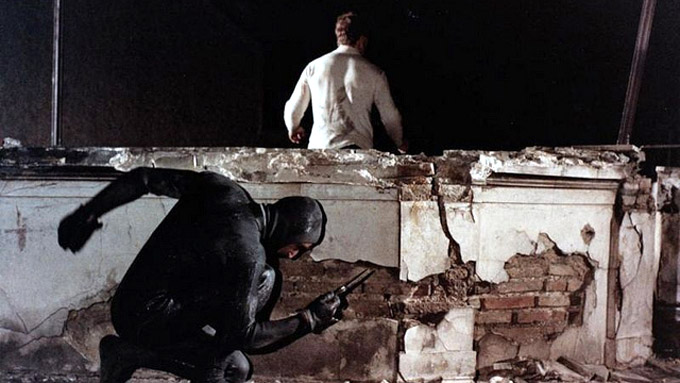
Hans is a 2006 release directed by Louis Nero, a young Torinese filmmaker who’s made a handful of low budget films since his 2000 debut, Golem.

Friday, September 3rd, 2010 at 14:13 | 0 comments

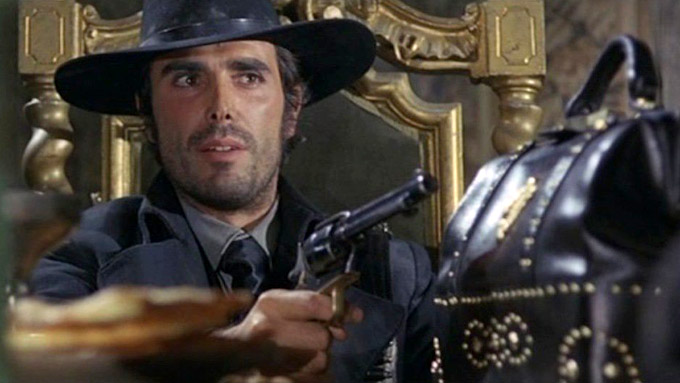
Durango is Coming, Pay or Die is an obscure Italian western from the early seventies, directed by the veteran filmmaker Roberto Bianchi Montero. Montero was a solid craftsman who made competent if unspectacular films in just about every popular genre going, and this is no different: the low budget is painfully evident at times and the plot is rubbish, but it’s reasonably enjoyable and better made than many of its ilk.

Friday, August 27th, 2010 at 14:42 | 0 comments
Categories: Reviews

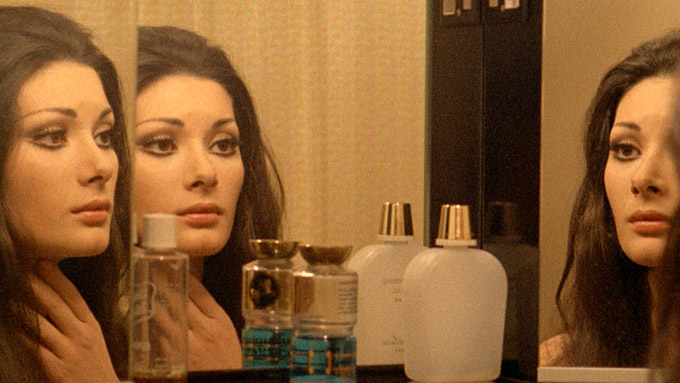
Another in the series of Italian films released by the apparently barmy MYA label – quite who do they think their market is for this stuff! – A Policewoman in New York is a 1981 sex comedy starring Euro-exploitation favourite Edwige Fenech.

Friday, July 30th, 2010 at 15:32 | 0 comments
Categories: Reviews

Here’s one I reviewed a while back for The Eurospy Guide, but seeing as a new, fan-dubbed version has become available here, it seemed like a good opportunity to give it another look…

Tuesday, July 27th, 2010 at 11:54 | 0 comments
Categories: Reviews

Primitive Love is a bizarre combination of slapstick comedy and mondo movie, made in 1964 by the late Luigi Scattini and starring Jayne Mansfield

Friday, July 16th, 2010 at 13:07 | 1 comment
Categories: Reviews

This little-known spy film Mexican Slayride was financed by three important production companies in the world of low-budget cinema during the late 1960s.

Friday, June 18th, 2010 at 16:15 | 0 comments
Categories: Reviews

Women of Devil’s Island is a 1962 film written and directed by Domenico Paolella, a former critic who specialized in low-but-not-no budget historical adventures and peplums.

Friday, May 28th, 2010 at 13:40 | 0 comments
Categories: Reviews

Pietro Germi’s 1953 film Gelosia isn’t perhaps one of his best known or even more accomplished works, but it’s still a well constructed and extremely moving production that stands head and tails above much of the Italian cinema being made at the time.

Friday, May 14th, 2010 at 15:32 | 0 comments
Categories: Reviews

Le sette vipere, aka Le sette vipere: Il marito latino, is an obscure Italian film from 1964 which should be of interest to European cult cinema aficionados thanks to the people involved if nothing else. As well as being directed by Renato Polselli, who garnered something of a following with his sexy horror films, it was written and stars Vincenzo Cascino, a shadowy figure who made two of the weirdest eurospy movies going, Sette donne d’oro contro due 07 (66) and Le sette cinesi d’oro (67).

Friday, May 7th, 2010 at 16:06 | 0 comments
Categories: Reviews

Malizia is another in a trend in Italian films from the early seventies to feature a sexy young woman arriving in the household of a supposedly bourgeois family and arousing all sorts of uncivilised passions (see also La nipote etc etc). It’s a kind of erotic melodrama with comic moments, but all done in a very artful, elegant fashion, with few of the more exploitative elements that characterised these kinds of productions.

Friday, April 30th, 2010 at 14:25 | 0 comments
Categories: Reviews

Dear oh dear. If you want to see the depths to which Italian genre cinema had sunk by the mid to late 1980s, you could do a lot worse than checking out Claudio Fragasso’s Zombie Flesheaters 3, a film so amateurish and imbecilic it makes the likes of Ratman and Patrick Lives Again look like veritable masterpieces.

Wednesday, April 28th, 2010 at 13:11 | 0 comments
Categories: Reviews

Giuseppe Ferrara is one of those directors of whom I am aware, rather than familiar. After beginning his career as a journalist and as a documentary filmmaker, he directed his first full length feature, Il sasso in bocca, in 1969. Since then, though, his releases, although often controversial, have been relatively infrequent. There was Faccia di spia (Face of a Spy, 75), with its use of horrific, mondo-style footage, the Lando Ventura vehicle Cento giorni a Palermo (84) and the award winning Il caso Moro (86). In more recent years, he’s made respected but hardly money-spinning films such as Giovane Falcone (93), Segreto di stato (95), I banchieri di Dio (The Bankers of God: The Calvi Affair, 2002) and Guido che sfidò le Brigate Rosse (2007), his latest film to date. Narcos, his 1992 film, made after a six year absence from cinema, initially looks as though it might be something a little atypical, primarily because it’s set in Columbia rather than Italy. Before long, though, it becomes apparent that he’s using the Columbian settings to put across a message about Italian society: it’s a place that’s similarly ridden by political corruption, under the control of powerful crime-lords and full of young men who are sucked into lives of criminality because, quite frankly, there isn’t much else in the way of opportunity for them.

Friday, April 23rd, 2010 at 13:18 | 0 comments
Categories: Reviews

Chiamate 22-22 tenente Sheridan is an obscure 1960 giallo directed by comedy specialist Giorgio Bianchi. A spin off from a popular television series of the time, Tenente Sheridan, which also starred Ubaldo Lay, it’s of some historical interest for being one of the earliest Italian feature films to have been spawned from the then-novel TV medium.

Friday, April 9th, 2010 at 14:49 | 0 comments
Categories: Reviews

Released in March 1958, Giovani Mariti was an early work from director Mauro Bolognini that continued much along the same lines as his earlier production Gli innamorati (55), a light drama about the lives and loves of several young adults in Rome. This is a more serious film, though, with a distinctly melancholic air and a skeptical view of the status quo, which sees the characters gradual progression into adulthood as a not entirely positive thing.

Thursday, April 1st, 2010 at 11:06 | 0 comments

Despite its wartime setting, Il gobbo deserves consideration in any study of Italian crime cinema. Not only was it directed by Carlo Lizzani, who would go on to become one of the leading lights of the genre as the 1960s progressed, but also – with its outlaw protagonist, breakneck pacing and realistic backdrop – it exerted a huge influence on numerous films to follow.

Friday, March 26th, 2010 at 14:24 | 0 comments
Categories: Reviews

La velocità della luce is an obscure little Italian thriller that had a limited Italian theatrical release in 2008. Unfortunately, it never had any kind of international distribution, even on the festival circuit, so the only way it can be seen is in an unsubtitled Italian version… it deserves more.

Friday, March 12th, 2010 at 15:46 | 0 comments
Categories: Reviews

Over the last forty years – since his debut Thomas e gli indemoniati in 1970 – Pupi Avati has proven to be one of the most prolific and acclaimed directors working in Italy. His films range from giallos (La casa dalle finestre che ridono (76)) to biopics (Noi tre (84)), from comedies (Il cuore altrove (2003)) to dramas (Regalo di Natale (86)).

Tuesday, February 23rd, 2010 at 12:53 | 0 comments
Categories: Reviews

Red Coat is a rather peripheral entry into the White Fang series of films. It has all the key elements of the genre – snowy, mountainous settings, big men in fur coats, copious sledge riding, imperilled child protagonist – except one: it doesn’t feature a dog.

Tuesday, February 16th, 2010 at 11:58 | 0 comments
Categories: Reviews

Carlo Ludovico Bragaglia’s fourth and final film of 1958 was La spada e la croce, which also marked a return to the kind of historical adventures that he’d had some success with earlier in his career (Il falco rosso (49), A fil di spada (52), Il falco d’oro (55)). Unfortunately, though, it’s a rather flat affair and, although not badly made, it suffers in comparison with some of the more vibrant, modern films in the same general field that were being made in Italy at the time.

Friday, February 5th, 2010 at 10:28 | 0 comments
Categories: Reviews

Here’s an entirely fabulous French / Italian co-production from 1970, directed by Georges Lautner. A kind of perverse (or more perverse) reworking of The Postman Always Rings Twice, it’s the type of film which really reminds me why I love European cinema of the time quite as much as I do. And, as with so many of these kinds of films which bridge the arthouse and the exploitatative, it’s rather fallen through the cracks today, probably better known for it’s ubercool soundtrack (which features on Kill Bill Vol 2) than anything else.

Friday, January 15th, 2010 at 15:59 | 0 comments
Categories: Reviews