Ruggine, by Daniele Gaglianone

September 6, 2011 in New Italian Cinema

Ruggine

Ruggine

Here’s an interesting looking new Italian film, Ruggine, directed by Daniele Gaglianone.  Gaglianone has picked up a number of awards over the years for films such as Nemmeno il destino and Pietro.  His work generally seems to deal with young characters who live on the very edges of urban Italian society, and Ruggine is no different.  The plot follows:

The difficult pre-adolescence of a “gang” of kids, immigrants in a desolte district called Alveari, on the outskirts of a big city. In this no man’s land between city and countryside, there’s a large wasteground – a huge “monster” of rusty scrap metal – which is the place where they play.  But suddenly a real monster emerges: two girls are raped and killed, and suddenly everything changes.  The following, fearful summer is marked by skirmishes between gangs as the young characters come to grips with their own timid feelings and grow up quickly, as remembered by three people – Sandro, Carmine, Cynthia -who are still indelibly marked by their experiences.

This was based on a novel by Stefano Massaron, who’s better known in Italy as a translator of novels by JG Ballard and Jonathan Coe (which shows he has good taste, at any rate).  It sounds like a cross between, well, The Big Chill, It and The Reflecting Skin, but that’s pure guesswork.

The reviews have been positive, and it received a lengthy ovation at Venice.  According to CineClandestino, it’s a: “Pessimistic work which is entirely alien to Italian cinema, as alwasy for Gaglianone, who again proves unwilling to compromise.”  Reppublica, meanwhile, calls the director “one of the best kept secrets of Italian cinema… The hope, inevitably, is that with Ruggine Gaglianone may finally able to be seen and appreciated outside the circle of those who follow his work for years.”

The cast includes the busy Filippo Timi (Vincere, The Solitude of Prime Numbers, Vallanzasca), Valeria Mastandrea (Night Bus, the Caiman) and Valeria Solarino (Holy Money).  I want to see this one!

Here’s the trailer:

Share and Enjoy

  • Facebook
  • Twitter
  • Delicious
  • LinkedIn
  • StumbleUpon
  • Add to favorites
  • Email
  • RSS

Latest news on the fumetti book

August 26, 2011 in Fantastikal Diabolikal Supermen, Latest News

Just thought I’d give you a quick heads up about what’s happening with the fumetti book, Fantastikal Diabolikal Supermen, as I said originally it would be coming out something like a year ago!

Anyway, the situation is this:  we’re very close to finishing it.  A friend of mine who is a proper (as opposed to a self-taught!) graphic designer is checking over my designs to make sure I haven’t made any glaring errors – the last thing I want is for, say, all the images to come out looking rubbish – and do a bit of final tidying up, but that side of things is all nearly done.  In the meantime, we’ve been working on the credits as well; intially I was just going to include bog standard information about the films, but now we’ve decided that it would be remiss not to make more of it and include full credit information, which means poring over screengrabs and trying to id those obscure actors who appear in all these films.

So we’re nearly there, but not quite.  I’m hoping to get all of this stuff finished by the end of September and have the final, published book out by October.  Fingers crossed.  I’ll post up some spreads so you get an idea of what it’ll be like in the next week or so.

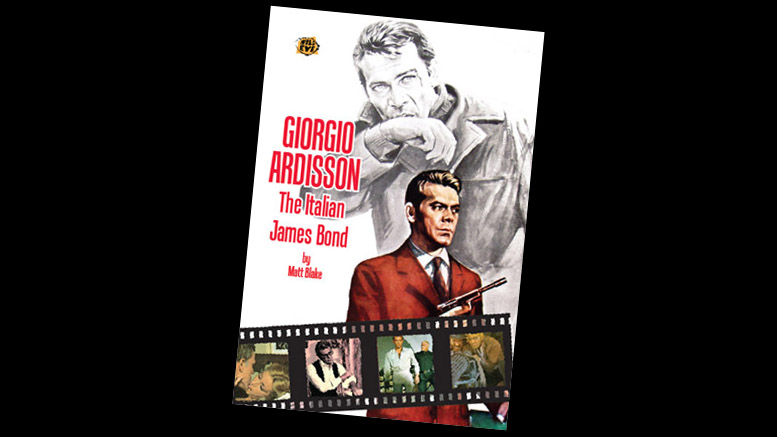
The good news is that, once we have this first book done and dusted, it should be much, much easier (and quicker) to publish the second one, which will be about the films of Giorgio Ardisson.  More soon…

Share and Enjoy

  • Facebook
  • Twitter
  • Delicious
  • LinkedIn
  • StumbleUpon
  • Add to favorites
  • Email
  • RSS

R.I.P. Ermanno Curti

August 23, 2011 in Latest News

Ermanno Curti might not be the best known of figures in the English speaking world, but he was a hugely significant figure in the history of Italian genre cinema.  As well as being a producer – he was the mover and shaker behind most of Fernando Di Leo’s films, including the trilolgia della mala (Calibre 9, The Boss and Manhunt) as well as a handful of other films such as Star Pilot (66) and Liberi, armati, pericolosi (76) – he was also an important distributor.  He founded Milanese production company Daunia 70in the early 70s, which later became Gruppo Minerva International, and later becoming an honourary president of Minerva Pictures / RaroVideo in the 2000s (which explains why most of his films were released by Raro on DVD).  He was married for many years to Eleonora Ruffo, and died on August the 18th.

Share and Enjoy

  • Facebook
  • Twitter
  • Delicious
  • LinkedIn
  • StumbleUpon
  • Add to favorites
  • Email
  • RSS

In the Market by Lorenzo Lombardi

August 19, 2011 in New Italian Cinema

In the Market

In the Market

Out last week in Rome, In the Market, directed by Lorenzo Lombardi.  The Italians seem to be making an attempt to muscle in on the rural massacre move with Zampaglione’s Shadow and this, and while it’s nice to see some kind of genre cinema happening it would be nice if they took something a little more ambitious than torture porn as their inspiration.  But, hey, people would have said the same thing during the heyday of the giallo, so maybe I’m just being cantankerous.

Anyway, this was a totally self funded project, just like Hypnosis, which was made for a similar (low) budget.  The plot follows three youths, David, Sarah and Nicole, who embark on a road trip across the country to go and see their favorite rock band. Unfortunately not everything goes as planned: things start to get complicated when they decide to stop at a service station for fuel and have all their possessions during a robbery. Forced to look for a place to call the police, they continue along the road, until they arrive at a market, where, tired and hungry, they decide to shelter for the night, not knowing that inside it isn’t only animal flesh that’s for sale…

Reviews have been hit and miss.  It’s picked up awards at several festivals, but mainstream critics have been less convinced.  The cast features Ottaviano Blitch (from Shadow) and the special effects are by Sergio Stivaletti.  It’s shown on a couple of dozen screens, but box office records are difficult to come by at this time of year because of the Italian holidays…

Here’s the trailer:

Share and Enjoy

  • Facebook
  • Twitter
  • Delicious
  • LinkedIn
  • StumbleUpon
  • Add to favorites
  • Email
  • RSS

Directory of World Cinema: Italy

August 18, 2011 in Books & Magazines

Directory of World Cinema: Italy

Directory of World Cinema: Italy

This looks like an interesting release:

Italian cinema has proved very popular with international audiences, and yet a surprising unfamiliarity remains regarding the rich traditions from which its most fascinating moments arose. Directory of World Cinema: Italy aims to offer a wide film and cultural study in which to situate some of Italian cinema’s key aspects, from political radicalism to opera, and from the arthouse to popular genres. Essays by leading academics about prominent genres, directors and themes provide insight into the cinema of Italy and are bolstered by reviews of significant titles. From silent spectacle to the giallo, the spaghetti western to the neorealist masterworks of Rossellini, this book offers a comprehensive historical sweep of Italian cinema that will appeal to film scholars and cinephiles alike

Part of the Directory of World Cinema series

Features contributions from interesting writers like Austin Fisher, Iain Robert Smith, Christopher Frayling etc etc.  Austin has a lot more info up on his blog, or you can pre-order it here


Share and Enjoy

  • Facebook
  • Twitter
  • Delicious
  • LinkedIn
  • StumbleUpon
  • Add to favorites
  • Email
  • RSS

At the End of the Day, by Cosimo Alemà

August 5, 2011 in New Italian Cinema

At the End of the Day

At the End of the Day

Another new Italian horror film, this time directed by Cosimo Alemà, a famous director of music videos and commercials.  There have been trailers for this self-financed effort floating around on the web for a while now, but it finally opened in about 60 cinemas (not a bad showing), coming in a respectable 7th place in the box office and making a decent return.  The plot apparently, revolves around:

… a group of friends spending some time in the woods, playing paintball and engaging in unexpected romances. Little they knew that they were not alone: mysterious killings happens, and a constant menace is upon them. What started out as a innocent war-game ends up turning into a deadly man-hunt.

So, a bit like an Italian version of the Spanish film Paintball (or Severance, or Wilderness, or Southern Comfort if you want to go way back).  The review on ComingSoon describes it more as being like a tense action thriller than a gore filled horror movie and describes the director as being technically capable and with a good eye, but complains that the script is weak and sometimes predictable.


Share and Enjoy

  • Facebook
  • Twitter
  • Delicious
  • LinkedIn
  • StumbleUpon
  • Add to favorites
  • Email
  • RSS

John Landis on being a spaghetti western stuntman

August 2, 2011 in Latest News

Taken from The Metro, of all places…

Is it true you were a stuntman as well?

I didn’t intend to become a stuntman. The first feature that I had a real job on was Kelly’s Heroes, shot in 1969 in the former Yugoslavia, when the Iron Curtain really meant something. I’ve never forgotten it – landing there was like going from colour to black and white. That was at the height of the spaghetti western boom so I drove to Almeria in Spain where there was a tremendous amount of production going on. I was there for a year and worked on more than 50 movies. Most of the time I was a stuntman. I became very adept at falling off a horse.

Any nasty accidents?

I got bruised a lot. There was this terrible Italian pirate movie. There was one stunt for which I got paid $175 (£93), which was a fortune to me. There were four of us dressed as pirates and we were supposed to leap off this mast into the water. It was very high. So we jumped and there are two things I remember. One was: ‘Gee, I’m falling an awfully long time.’ And two was that when we hit the water it was like hitting concrete. Nothing broke but I was one big bruise for a week.

Read more: http://www.metro.co.uk/showbiz/interviews/19223-60-seconds-john-landis#ixzz1Ts7LtCt5

Share and Enjoy

  • Facebook
  • Twitter
  • Delicious
  • LinkedIn
  • StumbleUpon
  • Add to favorites
  • Email
  • RSS

R.I.P Gio Stajano

August 1, 2011 in Latest News

Gio Stajano

Gio Stajano

Another fabulous character from the dolce vita period has died.  Gio Stajano, who used the stage name Maria Gioacchina Stajano Starace contessa Briganti di Panico was born in Sannicola, December 11, 1931 and was a writer, journalist, actress and painter.

Gioacchino Stajano Starace, conte Briganti di Panico, was the grandson of Achille Starace, a prominent fascist. At 12 years, with the fall of fascism, his parents separated and he attended the Jesuit college of Mondragone. After high school, he moved to Florence, where he attended the Art Academy before moving to Rome and studying at the Faculty of Architecture.

In 1956, during the annual Art Fair in Via Margutta in Rome, Stajano exhibited his paintings, gaining a moderate success. He met De Chirico, Guttuso, Moravia, and began to attend the environments depicted by Fellini’s La dolce vita. In 1959, an autobiographical text recounting his wild escapades in the cafe society of Rome, was published. Because of its explicit homosexual content, it was seized by authorities on morality charges which, of course, helped to focus the attention of the tabloid press on the author.

Stajano hastened to publish Meglio l’uovo oggi, again on homosexual life in Rome, which revealed in a way which was not too difficult to decipher the homosexuality of several characters, including which the former king Umberto II of Italy. Another scandalous book, Roma erotica, followed.

Although these novels were seized shortly after their release in bookstores, a certain number of copies were sold and helped to further increase the fame of the author.

Now infamous, he got a part in Fellini’s La dolce vita (which, however, due to a quarrel with the director, was not included in the edition of the movie for theaters, but it was added in later editions restored for television and videocassettes / DVDs) and began contributing to the weekly tabloid Lo speechio

In 1961, summoned and interrogated by magistrates as part of the “balletti verdi” scandal, he appeared in district court in protest dressed as a woman in mourning, with a ball of black knitting wool.

With the birth of the gay movement, which he never joined, and the social changes of the late sixties, the interest such scandalous figures diminished. In 1983, however Stajano return to public attention, undergoing sex reassignment surgery in Casablanca, taking the name Maria Joaquina Stajano Starace.

After the sex change he released his first interview with the journalist Francis D. Caridi for “Il Borghese”, a weekly for which he had previously written articles signed with the pseudonym of “Pink Panther”, targeting the Roman aristocracy. Finally, his autobiography, La mia vita scandalosa, was published in 1992..

In recent years, his soul-searching led to reconciliation with the Catholic religion. Stajano told the press (with great hype) that she wanted to enter a convent, but could not do it solely because of her sex change (which not recognized as legitimate by the Catholic Church). Finally, she found shelter at the Bethany nuns of the Sacred Heart at Vische, as a lay sister. She byed in a nursing home in Alezio July 26, 2011, at the age of 79 years.

As well as La dolce vita, Stajano appeared in about a dozen other films, mostly in cameos that played on his reputation (in the likes of Sergio Corbucci’s Totò, Peppino e…la dolce vita (62)).  But he also appeared in some more unexpected productions in the 70s: Fernando Di Leo’s Gli amici di Nick Hezard (76), Dino Risi’s In nome del popolo italiano (72), for instance.

Gio Stajano, who used the stage name Maria Gioacchina Stajano Starace contessa Briganti di Panico was born in Sannicola, December 11, 1931 and was a writer, journalist, actress and painter.
Gioacchino Stajano Starace, conte Briganti di Panico, was the grandson of Achille Starace, a prominent fascist. At 12 years, with the fall of fascism, his parents separated and he attended the Jesuit college of Mondragone. After high school, he moved to Florence, where he attended the Art Academy before moving to Rome and studying at the Faculty of Architecture.
In 1956, during the annual Art Fair in Via Margutta in Rome, Stajano exhibited his paintings, gaining a moderate success. He met De Chirico, Guttuso, Moravia, and began to attend the environments depicted by Fellini’s La dolce vita. In 1959, an autobiographical text recounting his wild escapades in the cafe society of Rome, was published. Because of its explicit homosexual content, it was seized by authorities on morality charges which, of course, helped to focus the attention of the tabloid press on the author.
Stajano hastened to publish Meglio l’uovo oggi, again on homosexual life in Rome, which revealed in a way which was not too difficult to decipher the homosexuality of several characters, including which the former king Umberto II of Italy.  Another scandalous book, Roma erotica, followed.
Although these novels were seized shortly after their release in bookstores, a certain number of copies were sold and helped to further increase the fame of the author.
Now infamous, he got a part in Fellini’s La dolce vita (which, however, due to a quarrel with the director, was not included in the edition of the movie for theaters, but it was added in later editions restored for television and videocassettes / DVDs) and began contributing to the weekly tabloid Lo speechio
In 1961, summoned and interrogated by magistrates as part of the “balletti verdi” scandal, he appeared in district court in protest dressed as a woman in mourning, with a ball of black knitting wool.
With the birth of the gay movement, which he never joined, and the social changes of the late sixties, the interest such scandalous figures diminished.
In 1983, however Stajano return to public attention, undergoing sex reassignment surgery in Casablanca, taking the name Maria Joaquina Stajano Starace.
After the sex change he released his first interview with the journalist Francis D. Caridi for “Il Borghese”, a weekly for which he had previously written articles signed with the pseudonym of “Pink Panther”, targeting the Roman aristocracy. Finally, his autobiography, La mia vita scandalosa, was published in 1992..
In recent years, his soul-searching led to reconciliation with the Catholic religion.  Stajano told the press (with great hype) that she wanted to enter a convent, but could not do it solely because of her sex change (which not recognized as legitimate by the Catholic Church). Finally, she found shelter at the Bethany nuns of the Sacred Heart at Vische, as a lay sister. She byed in a nursing home in Alezio July 26, 2011, at the age of 79 years.

Share and Enjoy

  • Facebook
  • Twitter
  • Delicious
  • LinkedIn
  • StumbleUpon
  • Add to favorites
  • Email
  • RSS

R.I.P Silvio Narizzano

July 29, 2011 in Latest News

Canadian director Silvio Narizzano, who worked extensively in Europe during the 1960s and 70s, died on the 26th July, 2011.

Narizzano was best known for his swinging sixties comedy drama Georgy Girl and the Hammer thriller Fanatic (65), but he also directed a couple of films of interest to fans of popular European cinema. Senza ragione, aka Redneck, was a bizarre 1973 crime film with Telly Savalas, Franco Nero and child star Mark Lester.  The 1979 production Las flores del vicio aka Bloodbath, with Dennis Hopper, Carroll Baker and weird Spanish actor David Carpenter, was even stranger (the blurb on IMDB runs:  “Chicken, a desperate hippie junkie living in a small Spanish village, is finding it difficult to separate fantasy and reality. This isn’t helped by the villagers practising magic and child sacrifice, or his involvement with a group of boozy ex-patriots lost in their own dreams and regrets…”)

Here’s the full obit from The Guardian:

The film and TV director Silvio Narizzano, who has died aged 84, handled several genres throughout his career, including black comedies, period pieces, social dramas, action thrillers and horror movies. But one picture, his swinging London romantic comedy Georgy Girl (1966), stands out from the rest of his eclectic filmography.

Georgy Girl was part of the trend in which British cinema shifted the focus from provincial life and back to the metropolis, celebrating new freedoms and social possibilities. Narizzano, influenced by the French New Wave and his chic contemporaries Richard Lester, John Schlesinger and Tony Richardson, explored such “shocking” subjects as abortion, illegitimacy, adultery and sexual promiscuity with a light touch. The film, which took its cue from the jaunty title song by the Seekers, had superb performances from Lynn Redgrave as the virginal and plain Georgina; Charlotte Rampling as her sexy and amoral flatmate, made pregnant by her charming, laidback boyfriend (Alan Bates); and James Mason as a wealthy businessman who takes more than a fatherly interest in Georgy. The film was nominated for four Oscars, for best actress (Redgrave), supporting actor (Mason), cinematography (Kenneth Higgins) and original song. Narizzano was nominated for a Bafta for best British film and a Golden Bear at the Berlin film festival.

The son of an Italian-American family, Narizzano was born in Montreal and educated at Bishop’s University in Quebec. After graduation, he joined the Mountain Playhouse in Montreal. The theatre was run by Joy Thompson, a leading figure in English-language theatre in Quebec and a great influence on Narizzano. He then joined the Canadian Broadcasting Corporation, working as an assistant to Norman Jewison, Arthur Hiller and Ted Kotcheff. Soon after co-directing a documentary about Tyrone Guthrie, the artistic director of the Stratford Shakespeare Festival in Ontario, Narizzano came to Britain to work in television.

He rapidly reached the top as a director, gaining plaudits for his work on ITV Television Playhouse (1956-60), a series of Saki tales (1962) and ITV Play of the Week (1956-63), all with superb casts and writers. He directed JB Priestley’s anti-nuclear play Doomsday for Dyson (1958); an episode of the BBC series On Trial, starring Micheál MacLiammóir as Oscar Wilde (1960); and 24 Hours in a Woman’s Life (1961), starring Ingrid Bergman and adapted by John Mortimer from Stefan Zweig’s novel.

Narizzano’s feature debut was Fanatic (1965), a Hammer horror film notable for being Tallulah Bankhead’s last movie (and her first in 20 years). She plays a crazed religious fanatic who keeps her dead son’s fiancee (Stefanie Powers) prisoner, hoping to “cleanse” and then kill her so that she can marry the dead son in heaven. Narizzano managed to coax a venomous performance out of Bankhead, who was intoxicated throughout the shoot. After being shown the film with a small audience of her friends, Bankhead, who is seen in many harsh, unflattering close-ups, announced: “Darlings, I must apologise for looking older than God’s wet nurse.”

The triumph of Georgy Girl was followed by Blue (1968), a plodding western starring Terence Stamp, which opened to withering reviews but, surprisingly, remained Narizzano’s favourite film. Loot (1970), a pointless reworking of Joe Orton’s mordant play by the comedy TV writers Ray Galton and Alan Simpson, and directed at a rapid pace, was only marginally better received.

Narizzano was more at ease with Why Shoot the Teacher? (1977), a feelgood adaptation of a novel set in Saskatchewan in the mid-1930s. Then it was back to British television with William Inge’s Come Back, Little Sheba (1977), fluidly directed on an elaborate studio set, starring Laurence Olivier and Joanne Woodward. In contrast, Staying On (1980), Julian Mitchell’s adaptation of Paul Scott’s novel, was shot for Granada Television in Simla, India, with Trevor Howard and Celia Johnson.

From the mid-60s, Narizzano lived with his longtime companion, the writer Win Wells, in Mojácar in Andalusia, Spain, as well as keeping a house in London. Wells co-wrote the screenplay of Narizzano’s Bloodbath (1979), a weird straight-to-video horror movie, shot in Mojácar, starring Dennis Hopper as the leader of a group of degenerate Americans terrorised by locals for their indulgence in drugs and sex.

After directing a Miss Marple mystery, The Body in the Library (1984), for the BBC, Narizzano’s work began to tail off. Since his 30s, he had suffered from bouts of depression which became more serious and prolonged after the death of Wells in 1983. He found some comfort at a Buddhist retreat in Chislehurst, south-east London, and later through a Bible study group in Greenwich, where he lived a semi-reclusive life. He is survived by two sisters and a brother.

Share and Enjoy

  • Facebook
  • Twitter
  • Delicious
  • LinkedIn
  • StumbleUpon
  • Add to favorites
  • Email
  • RSS

R.I.P. Linda Christian

July 25, 2011 in Latest News

Linda Christian

Linda Christian

Linda Christian has died on the 22nd July in California, aged 87.

Born to a Dutch father and Mexican mother, Linda Christian spent much of her early life travelling to where here father’s work took her: South America, the Middle East, Africa and Europe.  Unsurprisingly, perhaps, she became an accomplished polyglot, speaking six languages fluently and others less so.

Although she wanted to be a doctor while growing up, she was persuaded by Errol Flynn to move to Hollywood and become an actress. She was soon spotted by Louis B. Mayer’s secretary and offered a seven year contract with MGM.  Her debut came with the musical Up in Arms (44), and other roles rapidly followed.  Perhaps her best known film of this period was Tarzan and the Mermaids (48).

She was better known, though, for her marriage to Tyrone Power than any of her performances.  It lasted between 1949 and 1956 and resulted in two children (Taryn and Romina Power, both of whom also became actresses) and acres of press coverage before their divorce.  She was still a tabloid favourite, and her relationships with Alfonso de Portago (who died in a car accident while they were involved with each other) and Edmund Purdom only bought more attention.

She spent a lot of time in Rome and Spain, and appeared regularly in Spanish and Italian films.  She was in Mario Mattoli’s comedy Appuntamento a Ischia and Mario Gariazzo’s interesting early thriller, Passport for a Corpse (62), not to mention Francesco Rosi’s bullfighting movie The Moment of Truth (65).  But none of her European films were particularly succesful, and she gave up the profession apart from making a brief return with performances in a couple of Sergio Pastore / Giovanna Lenzi films, Delitti and Amore inquieto di Maria (87)

Share and Enjoy

  • Facebook
  • Twitter
  • Delicious
  • LinkedIn
  • StumbleUpon
  • Add to favorites
  • Email
  • RSS

L’Erede by Michael Zampino

July 19, 2011 in New Italian Cinema

Here’s another interesting new Italian release, L’erede, directed by Michael Zampino.  It’s described as a psychological noir.  The synopsis goes like this:

After the death of his father, Bruno, a doctor from Milan, takes possession of an old villa set in the wilds of the Apennines. The inheritance, however, proves to be a curse.  When he meets his rude and suspicious neighbours, he becomes entangled in a web of suspicions that will change his life forever…

Zampino’s a new name to me, although he’s previously made a short called Goodbye Antonio, but it was co-written, interestingly, by Ugo Chiti, a screenwriter who has worked repeatedly with Matteo Garrone (Gomorrah, The Embalmer) and Giovanni Veronesi (Italians, Genitori & figli – Agitare bene prima dell’uso).  Lead actor Alessandro Roja was a regular on the TV version of Romanzo Criminale.  It hasn’t exactly had a huge release, appearing in just 5 cinema, but that’s all that the latest Argento film has played in as well.

Reviews have been broadly positive.  CineZone gave it 2.5 out of four stars, saying: “This is how a film without much money should be made… with a good idea and sound technique… Pupi Avati would surely applaud this film as it was surely inspired by his thrillers.”  Comingsoon refers to it as a “genre film that is very nicely done – if a bit predictable – smoothly made and with a good atmosphere.”  Sounds promising…

Here’s the trailer:

Share and Enjoy

  • Facebook
  • Twitter
  • Delicious
  • LinkedIn
  • StumbleUpon
  • Add to favorites
  • Email
  • RSS

R.I.P. Franca Stoppi

July 14, 2011 in Latest News

Franca Stoppi in Beyond the Darkness

Franca Stoppi in Beyond the Darkness

A link just posted up on the Nocturno Forum:

Yesterday, on July 9th, Franca Stoppi, president of U.N.A (Uomo Natura Animali) died.  Franca devoted her entire life to the defence of animal rights and a pacifist society, including the construction of a shelter for abandoned cats in FOligno, La Piccola Corte dei Miracoli, which now hosts more than 70 animals.

Franca Stoppi had a long and distinguished career as an actress and model.  She appeared in major theatres across Italy alongside her husband, Simone Mattioli, with whom she founded her own company.  She was also active on TV and in dubbing for over thirty years, beginning as a teenager.

Franca is best known for her appearances in a number of cult films from the late 70s / early 80s: Peter Skerl’s nutzoid Bestialita (76), Joe D’Amato’s Beyond the Darkness (Buio omega, 79), Bruno Mattei’s The Other Hell (L’altro inferno, 81).  Her last appearance was in Mattei’s 1983 Women in Prison film, Blade Violent (Emanuelle fuga dall’inferno, 83)

Share and Enjoy

  • Facebook
  • Twitter
  • Delicious
  • LinkedIn
  • StumbleUpon
  • Add to favorites
  • Email
  • RSS

Dreamland – La Terra dei Sogni

July 14, 2011 in New Italian Cinema

Released on the 8th July 2011: Dreamland – La Terra dei Sogni, directed by Sabastiano Sandro Ravagnani.  Not sure quite what to make of this one.  The poster features a couple of beefcake actors, which makes it look incredibly homo-erotic, but it sounds more like an dramatic action movie:

The story is set in the ‘Little Italy’ of Milwaukee, Wisconsin, a neighbourhood which covers about one square kilometer and which could just as well be in New York, Boston or Chicago or any other American town with a large population of Italian immigrants.

The neighbourhood is dominated by a struggle between rival gangs and one person, a former boxer and widower who is esteemed by everyone, suffers from their harassment more than most. However an unlikely friendship is born between him and one of the gang leaders, and they start working together to bring peace to the neighbourhood.

I’m getting the impression this isn’t really one of those urban crime films, more an attempt to make a kind of drama in which people find themselves through friendship, trust and bodybuilding (natch).  It was shot largely on location in America, and the reviews have been, well, not all that kind.  According to CineClandestino, who refused to even assign a rating to it, “the actions sequences are as ridiculous as anything seen since the silent era, and to make matters worse it’s packed with editorial errors… the dialogue, in a ridiculous Anglicised Italian, makes you’re skin crawl and the acting is naive at best.”  MyMovies were hardly any more positive: “Probably the best way to approach Dreamland is to take it as a kind of family video, something amateur and improvised and with a special dedication to the history of bodybuilding as embodied by the presence of Columbu. Any other view would make one cease believing in the potential of  cinema.”

I don’t know anything about the director, but Columbu has had a surprisingly active film career: he appeared in several Arnold Shwarzenegger classics (Conan the Barbarian, The Terminator, The Running Man), and also had a prominent role in Andreas Marfori’s 93 crime film Mafia Docks (also featuring Traci Lords).  He was also a body building coach to Sylvester Stallone and directed a 1997 film called Doublecross on Costa’s Island (featuring Frank Stallone, William Smith and Marino Mase).

The film is planned as the first in a series of three, which have a total budget of €4.6 million, which isn’t bad, some of which was invested by the Apulia Film Commission.  It’s been released into 13 cinemas, which isn’t huge, but still more than some.

Here’s the trailer:

Share and Enjoy

  • Facebook
  • Twitter
  • Delicious
  • LinkedIn
  • StumbleUpon
  • Add to favorites
  • Email
  • RSS

Hypnosis, by Davide Tartarini and Simone Cerri Goldstein

June 30, 2011 in New Italian Cinema

And another new one.  Hypnosis, directed by Davide Tartarini and Simone Cerri Goldstein, is a thriller / horror film, has opened in just under 50 cinemas throughout Italy, not bad distribution for a film made by unestablished directors and which isn’t a comedy.  Information is scanty… the synopsis is very short:

The idea of the film comes from the desire to tell of some “obscure” mechanisms of the mind and the human soul, and what happens when they are confronted with the facts beyond reason.

Well, that doesn’t tell us much.  So, any further details… well…

What is Hypnosis? It is a paranormal thriller centered hypnotherapy which tells the story of Isaiah R. Deutzberg, brilliant American experimental psychiatrist, and his patient, suffering from congenital cerebral aneurysm.

OK, well that’s a bit more.  Ah, here’s something a bit more in depth:

Hypnosis is a supposed video-documentary detailing the treatment that the American psychiatrist Isaiah R. Deutzberg leads on a patient, who suffers from a brain aneurysm that causes congenital disturbing visions about his childhood. After starting treatment, they go to the uninhabited village of Crespi d’Adda, where he was born, in search of the origins of (his) bad memories.

The only revioew I’ve been able to find isn’t particularly positive.  According to http://www.sentieriselvaggi.it

[It's] lacking the political inspiration that made Federico Zampaglione’s Shadow interesting, and the productionforces acting on it create a ridiculous effect that involuntary dilutes the tense situation, undermining the excellent on set photography work in the natural province of Bergamo. Unfortunately, people continue to confuse the vision with the look, the technique with the cinema. Too bad.

Here’s the trailer:

Share and Enjoy

  • Facebook
  • Twitter
  • Delicious
  • LinkedIn
  • StumbleUpon
  • Add to favorites
  • Email
  • RSS

5 (Cinque) by Francesco Maria Dominedò

June 28, 2011 in New Italian Cinema

5 (Cinque) is a new Italian crime film, which looks to have been highly influenced by Romanzo criminale.  According to the synopsis, it’s the story of:

Manolo, who is, and always has been, a blowhard. As a child, along with four roommates at his reformatory, he creates a gang of petty criminals. A blood pact sealing their friendship, which endures through their marrying, having children, taking drugs and other vices. Once grown, they decide to set up a robbery  and find that they have, in their hands, a booty that goes beyond their highest expectations: in addition to the millions of euros expected, they also find a briefcase with some top secret contents. While enjoying their new lives of luxury, the Russian Mafia discovers that they are in possession of the precious briefcase. For Manolo and his friends, their lives become a race for survival.

Its had a limited release, showing in just 6 cinemas, and a small budget (€350,000).  The reviews have been middling at best: “The director aims to reach the highest tradition of American gangster movie – and the attempt is commendable, considering the small number of genre films in Italy – but 5 (Five) falls short, coming up against intrinsic production limits and a script too tied to the movie stereotypes of the criminal world.” (Mymovies.it)

The director, Francesco Maria Dominedò, is a former actor who has spent some time in Hollywood.  The cast are all new to me…

Here’s the trailer:

Share and Enjoy

  • Facebook
  • Twitter
  • Delicious
  • LinkedIn
  • StumbleUpon
  • Add to favorites
  • Email
  • RSS

002 operazione Luna

June 24, 2011 in Latest News

002 operazione Luna

002 operazione Luna

1965
Original running time: 90 minutes
Italy
An IMA (Rome), Agata (Madrid) production
Distributed by Medusa
Director: Lucio Fulci
Story: Amedeo Sollazzo, Vittorio Metz
Screenplay: Vittorio Metz, Amedeo Sollazzo
Cinematography: Tino Santoni
Music: Coriolano Gori
Editor: Pedro del Rey
Art director: Adolfo Cofiño
Cast: Ciccio Ingrassia     (Ciccio / Major Borovin), Franco Franchi (Franco / Colonel Paradowsky), Monica Randal (Mishca Paradowsky), Linda Sini (Leonidova), Maria Silva, Enzo Andronico, Ignazio Leone, Emilio Rodríguez, Elena Sedlak, Pasquale Zagaria, Franco Morici, Piero Morgia

Story
Following an unexplained loss of contact with a space mission to the moon, Soviet authorities decide to avert news of the possible disaster by quickly sending off another mission, manned by exact doubles of the missing and now presumed dead cosmonauts.  Unfortunately, the only lookalikes they can come up with are a pair of idiotic thieves, Franco and Ciccio, who are kidnapped and launched into space.  Things only become more complicated for them when they return to earth…

Reviews
A Soviet spaceship is lost. To mask the failure a second spacecraft is sent to to the moon with the doubles of the two missing cosmonauts, thieves captured in Rome. One of the 15 films of 1965 made by the comedy double act Franco & Ciccio.  Three space probes (Lunik) were launched by the Soviets in 1959,and the American Apollo program put the first man on the moon in July 1969, four years after the two comics. (Morandini)

Other links
Giallo Fever
A good review here, although I think Keith makes a mistake typical of contemporary film reviewers, by viewing this as one of Fulci’s lesser works, a job for hire which he didn’t really care about.  It was, but these Franco & Ciccio gigs were films that the directors were extremely proud of (including Fulci), possibly more so than many of their films that were better known to English language audiences.  And talking of limitations ignores the fact that all Italian genre films were subject to creative limitations, whether they were westerns, horror films of comedies.

Here’s a clip on YouTube:

Share and Enjoy

  • Facebook
  • Twitter
  • Delicious
  • LinkedIn
  • StumbleUpon
  • Add to favorites
  • Email
  • RSS

6 Giorni sulla Terra

June 21, 2011 in New Italian Cinema

Hey, a new Italian sci-fi film!  6 Days on Earth, aka 6 Giorni sulla Terra, is directed by one Varo Venturi (a new name to me, but he directed an interesting sounding film in 2007 called Nazareno) and stars Massimo Poggio (who has featured in the likes of Sacred Heart (2005) and Il compleanno (2009)).  It was shot for a budget of €1 million and has been released on36 screens.

The synopsis goes something like this:

Dr. Davide, a courageous scientist, has been studying thousands of cases related to alien abductions, obtaining by the abductees under hypnosis, the unsettling thesis that some extraterrestrial races have been installing for millennia their active memories in the abducted people’s brains, in order to “live” through them in this dimension, exploiting a special human energy: the Soul… But when the scientist will decide to help Saturnia, a seductive eighteen-old girl that believes she has been abducted, and shows a clear attraction for him – he will have to face an insurmountable problem: once hypnotized, Saturnia will not leave anymore the trance condition, giving place to Hexabor of Ur – an alien entity coming from Mesopotamian ages that consider himself an half-god. This will be complicated by the unexpected discovery that Saturnia belong to a wealthy black aristocracy’s family…

Here’s the trailer:

Share and Enjoy

  • Facebook
  • Twitter
  • Delicious
  • LinkedIn
  • StumbleUpon
  • Add to favorites
  • Email
  • RSS

002 agenti segretissimi

June 7, 2011 in Latest News

002 agenti segretissimi

002 agenti segretissimi

1964
90 mins
Italy
A Mega Film Production
Distributed by Panta (Regional)
Director: Lucio Fulci
Story: Vittorio Metz
Screenplay: Vittorio Metz, Lucio Fulci, Amedeo Sollazzo
Cinematography: Bitto Albertini
Music: Piero Umiliani
Editor: Ornella Micheli
Art director: Giuseppe Ranieri
Cast: Franco Franchi (Franco), Ciccio Ingrassia (Ciccio), Ingrid Schöeller (the bride), Carla Calò (a Russian Agent), Aroldo Tieri (the groom), Annie Gorassini (the waitress), Nino Terzo (a Russian Agent), Poldo Bendandi (Head of the Russian Secret Service), Puccio Ceccarelli (the Chinese torturer), Seyna Seyn (a Chinese agent), Enzo Andronico, Ralf Colangelo, Francesco Torrisi, Anita Todesco, Alessandro Tedeschi, Luca Sportelli, Maria Luisa Rispoli, Rita Forzano, Mario Del Vago, Anna Maria Checchi, Nando Angelini, Mary Arden

Franco & Ciccio are mistaken for KGB Agents, Franco has a top secret formula that everyone wants implanted in his tooth, and they’re chased by the American, Chinese and Russian secret services.  Much chaos ensues…

Reviews

The film, despite some pleasent incidentals, such as the color and the settings, does not manage to improve on the the general sloppiness of their previous work. It is therefore of little comic force and often inclined to resort to vulgarity and unpleasantness.  (‘Segnalazioni cinematografiche’, vol. 58, 1965)

Ciccio and Franco, again without being aware of it, are involved in a complicated affair with the Chinese, Russian and American secret services. Difficult to judge as artistic product (in ’64 the two comedians participated in 16 films!), this kind of parody has become an interesting phenomenon on a sociological level. As, jokingly, they deal with real issues. Followed by 00-2 Operazione Luna. (Morandini)

Opening sequence

Share and Enjoy

  • Facebook
  • Twitter
  • Delicious
  • LinkedIn
  • StumbleUpon
  • Add to favorites
  • Email
  • RSS

Cinema Italiano by Howard Hughes

June 6, 2011 in Books & Magazines

Cinema Italiano

Cinema Italiano

While on the subject of books, Cinema Italiano by Howard Hughes has come out as well… this is one I knew nothing about until stumbling across it on Amazon.  According to the blurb:

Uncovering a treasure trove of Italian films from The Leopard to Puma Man – Italian filmmakers have created some of the most magical and moving, violent and controversial films in world cinema. During its twentieth-century heyday, Italy’s film industry was second only to Hollywood as a popular film factory, exporting cinematic dreams worldwide. With international finance and multinational stars, Italian filmmakers tackled myriad genres with equal gusto and in inimitable style. Cinema Italiano is the first book to discuss comprehensively both Italian ‘popular’ and ‘arthouse’ cinema of this golden age. Appraising over 400 movies, Cinema Italiano unearths the best of Italian cinema. Dario Argento’s ‘gialli’ thrillers and Sergio Leone’s spaghetti westerns are explored alongside the best films of Luchino Visconti, Federico Fellini, Pier Paolo Pasolini and Michelangelo Antonioni. Chapters discuss the rise and fall of genres such as mythological epics, gothic horrors, science-fiction, spy films, war movies, costume adventures, zombie films, swashbucklers, political cinema, spaghetti westerns and ‘poliziotteschi’ crime films. The book also traces the directorial careers and key films of such luminaries as Mario Bava, Sergio Corbucci, Francesco Rosi, Lucio Fulci, Duccio Tessari, Enzo G. Castellari, Bernardo Bertolucci and Gillo Pontecorvo. An essential guide for DVD and video collectors and aficionados alike, it is illustrated throughout with rare stills and international posters from this revered era in world cinema. Films include: La dolce vita, Hercules Conquers Atlantis, The Leopard, The Terror of Dr Hichcock, Contempt, The Gospel According to St Matthew, Castle of Blood, Fists in the Pocket, Django, Battle of Algiers, The Good, the Bad and the Ugly, Blowup, Diabolik, The Bird with the Crystal Plumage, The Conformist, They Call Me Trinity, Violent City, The Marseilles Connection, Illustrious Corpses, Suspiria, The Big Silence, The Mask of Satan, Maciste in Hell, Blood and Black Lace, Hercules Against the Moon Men, The Last Man on Earth, The Wild, Wild Planet, Special Mission Lady Chaplin, Django Kill!, Fellini Satyricon, Deep Red, Sons of Thunder, Tentacles, The Inglorious Bastards, Zombie Flesh Eaters, Puma Man, 1990: Bronx Warriors, 8½, Once Upon a Time in the West, L’Avventura, Black Sabbath, Investigation of a Citizen Above Suspicion.

Apparently this came out a month ago, but I haven’t found any reviews as yet.  I have a copy ordered and will report back when it arrives.

After a long, quiet patch, it’s suddently turning into something of a boom time for books on Italian Cinema (and, achem, I haven’t even mentioned the forthcoming debut WildEye publication, Fantastikal Diabolikal Supermen… damn, just did it again!)

Share and Enjoy

  • Facebook
  • Twitter
  • Delicious
  • LinkedIn
  • StumbleUpon
  • Add to favorites
  • Email
  • RSS

Any Gun Can Play, by Kevin Grant

June 6, 2011 in Books & Magazines

Well, it’s been a long time, but Kevin Grant’s definitive guide to the Spaghetti Western genre, Any Gun Can Play, has finally been released and is available from Amazon.  Well, let me rephrase that – it’s already sold out at Amazon, where it’s listed as being #70 in film references and guides…

Here’s the blurb:

Any Gun Can Play by Kevin Grant

Any Gun Can Play by Kevin Grant

THE EURO-WESTERN BEYOND LEONE

The success of Sergio Leone’s ‘Dollars’ trilogy in the ’60s sparked a gold rush, as a legion of European film-makers – many of them sharing the get-rich-quick mentality of Leone’s mercenary anti-heroes – followed the master’s lead to create some of the wildest Westerns ever made.

Cynical and stylish, bloody and baroque, Euro-westerns replaced straight-shooting sheriffs and courageous cowboys with amoral adventurers, whose murderous methods would shock the heroes of Hollywood Westerns. These films became box-office sensations around the world, and their influence can still be felt today.

Any Gun Can Play puts the phenomenon into perspective, exploring the films’ wider reaches, their recurrent themes, characters, quirks and motifs. It examines Euro-westerns in relation to their American ancestors and the mechanics of the Italian popular film industry, and spotlights the unsung actors, directors and other artists who subverted the ‘code’ of the Western and dragged it into the modern age.

Based on years of research backed up by interviews with many of the genre’s leading lights, including actors Franco Nero, Giuliano Gemma and Gianni Garko, writer Sergio Donati, and directors Sergio Sollima and Giuliano Carnimeo, Any Gun Can Play will satisfy both connoisseurs and the curious.

Complete with a foreword by Euro-Western legend Franco Nero, this stunningly illustrated reference guide takes aim at the lingering notion that the genre has little to offer beyond the ‘Dollars’ films and a fistful of others, exposing the full, vibrant history of the Euro-western.

CONTENTS:

FOREWORD
By Euro-western legend Franco Nero, star of Django, A Professional Gun and Keoma, among others.

INTRODUCTION
An overview of Euro-westerns, their origins and characteristics, plus the major professionals whose careers they launched, prolonged or transformed.

TARGET PRACTICE
Early Euro-westerns were hit-and-miss affairs, but A Fistful of Dollars is not the only film from the genre’s formative period worthy of recognition.

A BULLET SPENT, A DOLLAR EARNED
In the wake of For a Few Dollars More, the genre matured and broadened its horizons, presenting a misanthropic world-view, leavened with irony, that perfectly matched the tenor of the times.

RELATIVES AND RELIGION
Many Italian Westerns skewed their stories towards the home market, serving up stereotypical stories of troublesome females, feuding families and a satirical or critical treatment of religion.

‘GOD FORGIVES… I DON’T!’
Euro-westerns posit a world where betrayal is rife and violence ever-present, taking the theme of revenge to extraordinary extremes.

‘DON’T BUY BREAD, BUY DYNAMITE’
Euro-westerns were unashamedly populist, and many of them adopted a left-wing stance in the late Sixties, reflecting the influence of radical film-makers and the political atmosphere of the times.

BEWARE OF FAKE GUNS
While American Westerns had Jesse James, Wyatt Earp and Billy the Kid, European film-makers invented a pantheon of their own, populated by the likes of Django, Ringo, Sabata, Sartana and Trinity.

COWBOYS, COMEDIANS AND KUNG FU STARS
Many Euro-westerns were hybrids not just of cultural traditions and film-making styles, but also tones, subjects and settings, with elements such as mystery, comedy, horror and martial arts not uncommon.

DESOLATION AND DECONSTRUCTION
The genre burned brightly but briefly, and by the early Seventies it was in decline. This chapter examines what these latecomers have to offer, and whether they have been dismissed too lightly.

WHO’S WHO IN EURO-WESTERNS
A biographical A-Z of the most important and prolific actors, directors, composers, etc.

EURO-WESTERN FILMOGRAPHY
A chronological listing of European Westerns.

I haven’t had the chance to look at it all yet, but congratulations to Kevin and using my not-particularly-honed psychic skills I  feel happy prediciting that this is worth every penny of the £13 odd that it’s selling for!

Share and Enjoy

  • Facebook
  • Twitter
  • Delicious
  • LinkedIn
  • StumbleUpon
  • Add to favorites
  • Email
  • RSS